










How to Dry Your Car Without Scratching It
Most of the swirls I see on customers' cars did not come from washing. They came from drying. Here is the routine I use on my own car, why each step is there, and how to stop putting marks into paint you just spent an hour cleaning.
Here it is in one line: wash and rinse properly, get the car into shade, mist a drying aid onto each wet panel, then dry top down with two towels, a big one for the roof, bonnet and boot and a medium for the doors and everything lower. Wheels get their own towels that never touch paint. If you own a car dryer, run it before the towels and it makes the whole thing easier.
Why Drying Is Where Scratches Happen
The most contact, on the cleanest paintThink about what is actually happening when you dry a car. You have just spent half an hour getting the paint as clean as it gets, and now you are pressing a piece of fabric against it and dragging it around. No suds, no running water, nothing carrying anything away. Just towel on bare clear coat.
So anything still sitting on that panel, or anything living in the towel, gets pushed across the paint under pressure. That is where swirls come from. Not the wash. The dry.
Then there is the other problem, which is water spots. Leave a panel wet in an Australian summer and the water is gone in minutes, but the minerals it was carrying are not. They stay on the paint, and if they bake there long enough they etch in and you are into polishing to get them out.
So the whole game is this. Touch the paint as little as you can, press as little as you can, and get the water off before the sun beats you to it. Everything below is just how you do that.
How I Dry a Car
Seven steps, in this orderNone of this is complicated and none of it needs expensive gear. It is mostly about doing things in the right order and not rushing the last ten minutes after you have done everything else properly.
- Wash it properly. This is the drying step everyone skips. Whatever grit is left on the car after a lazy wash ends up under your towel, and no towel in the world saves you from that. How you do it depends on your gear. If you have a foam cannon: foam the car, rinse it off, foam it again, then go over it with a wash mitt. That first foam and rinse takes the loose grit off so the second foam is doing the real work and your mitt is the last thing touching the paint, not the first. If you are washing out of a bucket: rinse the car down thoroughly with the hose first to get the grit off, then straight into the two bucket method. Either way the rule is the same, nothing touches the paint until the loose dirt is off it. If the car has not been washed properly, do not dry it.
- Rinse it properly too. Pull the nozzle off the trigger gun and flood the car with an open hose. The water sheets off in one go rather than sitting there in beads, and you will be surprised how much comes off before you have touched anything. Less water on the car means less work for the towel.
- Get it into shade. If you dry in the sun you are racing evaporation, and evaporation wins. Shade, a shed, or early in the morning before it heats up. And keep the car wet until you are ready to start, because a panel that dries on its own is a panel with spots on it.
- Mist a drying aid on each panel. One or two sprays of drying aid or SiO2 spray onto the wet panel before the towel touches it. The towel glides instead of grabbing, and on a coated car you are topping up the protection every single wash. If you take one thing from this article, make it this. It does more than a better towel will.
- Two towels, top down. Big towel first for the roof, glass, bonnet and boot, because that is where you need the capacity. Then swap to the medium for the doors, guards and everything lower, where a lighter towel is easier to control. Lay it flat and drag it. Do not scrub, do not press, do not go in circles. The towel does the work, you are just moving it.
- Open the doors and boot. There is water sitting in every seal on that car and it will run down your clean paint about five minutes after you finish. Open everything, wipe the seals and jambs with a separate small towel, shut it up.
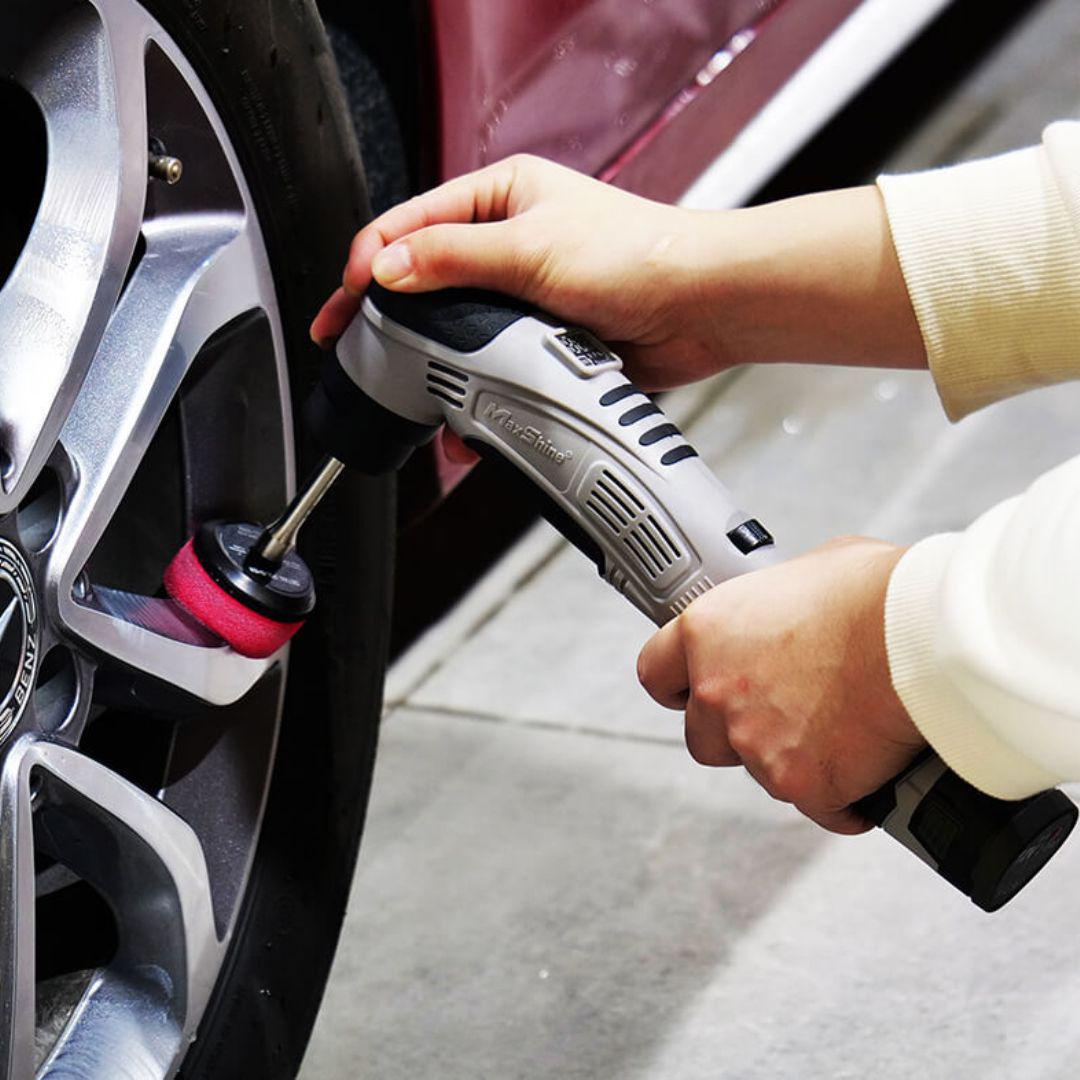
- Wheels last, with their own towels. Two small ones that live with the wheel gear and never go near paint. And this is a rule I hold to without exception: the moment a towel touches a wheel or hits the ground, that is a wheel towel now. It does not get a second chance.
Why two towels and not one big one. A big towel full of water is heavy and awkward, especially working down the side of a car. And a heavy towel makes you press, which is the one thing you are trying not to do. Split the job and both towels stay light and easy to handle the whole way round. Our drying towels come in both sizes.
Drying a Ceramic Coated Car
The coating does most of the workA coated car is the easiest thing in the world to dry, because the coating is already doing most of it for you. The water does not want to stay on the panel. So use that. Flood rinse and most of it leaves on its own, then the towel is only picking up a light film at almost no pressure. A blower makes it easier again if you have one.
The drying aid matters more on a coated car than anywhere else. Misting SiO2 on before you towel keeps the surface slick and tops the coating up every wash, and that is genuinely why some coatings still bead hard after three years while others go flat in twelve months. Same coating, different owner. If yours has already stopped beading, read why ceramic coatings stop beading before you write it off, because nine times out of ten there is nothing wrong with it.
If You Have a Car Dryer, Use It
Optional, but it makes the whole job easierEverything above works with towels and nothing else, and plenty of people dry immaculate cars that way. So do not read this and think you need to go spend money. But if you have a dryer, or you are thinking about one, it drops in before the towels and takes a fair bit of work off them.
The appeal is obvious. Air moves the water instead of fabric, so nothing touches the paint. Good on any car, better on anything where a mark is a pain to fix. Soft paint, coated cars, PPF, wraps and matte finishes are all in that group.
It does not replace the towels though, and anyone telling you otherwise has not dried a car with one. You still finish with a towel. You are just finishing a damp car instead of a wet one, which is the whole point.
Where a blower really earns its keep
Honestly, this is the real reason to own one. The water that spoils a good dry is not on the panels, it is hiding in the gaps, and it comes out ten minutes later and runs straight down a panel you finished. No towel gets in there. A blower clears the lot:
- Mirrors
- Badges and emblems
- Grilles
- Door handles
- Panel gaps
- Wheels and spokes
- Behind calipers
- Fuel filler areas
- Trim and seals
- Roof rails
Some machines also run heated or temperature controlled air, which speeds things up further depending on the model and the conditions you are working in.
Why filtered air matters
If you are shopping for one, understand this bit. A blower sucks air in from wherever you are standing and fires it straight back at your paint. If you are in a dusty shed or on a windy driveway, that is what is landing on the car you just washed.
A filter on the intake cuts that risk down. I am not going to tell you it makes drying scratch-proof, because nothing does. But the air hitting the paint is cleaner than the air in the room, and you are not dragging fabric across the panel either. That is two of the biggest risks in drying dealt with.
So if you are going touchless, get a proper automotive dryer with filtered airflow rather than whatever is cheapest. We stock car drying blowers including BIGBOI, from home garage size up to something that will keep up with a busy bay.
I get asked this constantly. Yes, a leaf blower moves water. The issue is what else it moves. There is no filter on it, and it has spent its whole life blowing dirt and leaves around the yard, so depending on the machine and where you are standing you can end up firing all of that at wet paint. If you are doing it occasionally on a clean driveway you will probably get away with it. But a proper car dryer with a filter is built for the job and safe to hold near a panel, and that is why I would not use the garden one on my own car.
Where It Goes Wrong
All avoidable- Bath towels and chamois. Rough fibres, nowhere for grit to go, and they do not hold enough water so you end up going over the same panel pressing harder each time. Number one cause of drying swirls, easily.
- Drying a car that is not actually clean. Wiping down something that has been rained on, or given a quick hose off and nothing else, just grinds road film into the clear coat. Foam or rinse the grit off first, every time.
- Scrubbing. Circles, pressure, going back over the same spot. That is how you make those neat swirl patterns you can see under the servo lights.
- One soaked towel for the whole car. Once it is full it stops absorbing and starts pushing water around, and that is exactly when people start leaning on it.
- Towels that have been on the floor. Or rolling around loose in the boot, or used on a wheel once. They pick up grit and they keep it. How you store your towels is paint protection, as odd as that sounds.
- Blowing it dry with the garden blower. Moves the water, might also move half the driveway onto your bonnet.
- Drying in the sun. You rush, you press, you still get spots. Nobody wins.
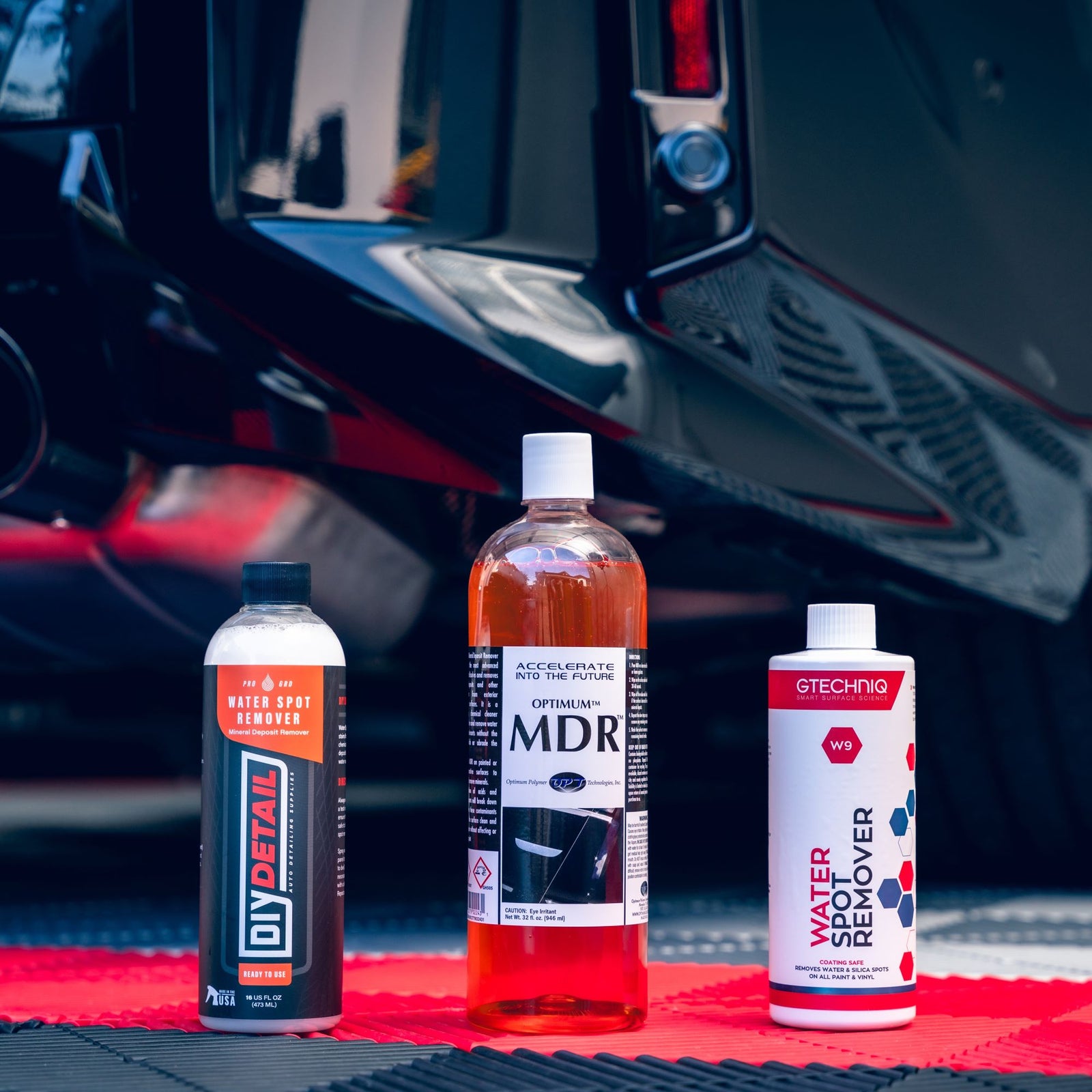
Perth, Adelaide, anywhere on bore water, this matters more for you. More minerals in the water means it spots faster and etches harder if you leave it. Use a drying aid, do the horizontal panels first because that is where water sits, and do not let any part of the car dry on its own. A blower helps a lot here too. Get this right and you save yourself a water spot removal job down the track.
Questions I Get Asked
Quick answersWhat's the safest way to dry a car after washing?
Shade, drying aid, then a light top-down towel pass with two clean microfibre towels. If you own a car dryer, use it first to shift the bulk of the water. The less towel contact and pressure the paint sees, the safer the dry. A quality twist loop microfibre towel used damp and dragged flat with almost no pressure will not scratch properly washed paint.
Do I need a car dryer, or are towels enough?
Towels alone are perfectly fine and most people dry that way. A dryer is an upgrade rather than a requirement. It reduces how much the towel has to do and clears the areas a towel physically cannot reach. They complement each other rather than compete. If you have a coated car, PPF, a wrap or soft paint, the touchless approach is well worth it because those are the surfaces where a towel mark shows up most.
Can I use a leaf blower to dry my car?
It will move the water, but it is not the better option. Garden blowers have no filtration and typically live a hard life shifting dust and leaves, so depending on the machine and where you are using it you can blow debris onto freshly washed paint. A purpose built automotive dryer with filtered airflow is designed for the job and reduces that risk.
Why does filtered air matter on a car dryer?
Because the blower is drawing air in from the room and directing it straight back onto your paint. A filter on the intake reduces the chance of airborne dust and debris being blown onto a freshly cleaned surface. It does not make drying scratch-proof, nothing does, but combined with the fact you are not dragging a towel across the panel it takes two of the biggest risks out of the drying stage.
Is it better to air dry or towel dry a car?
Never air dry. Evaporating water leaves behind whatever minerals it was carrying, which is exactly how water spots form, and in Australian sun it happens in minutes. Forced air from a blower is different, it physically moves water off the car rather than letting it evaporate, and pairs perfectly with a final towel pass.
Do I really need a drying aid?
Need, no. Benefit from, absolutely. A drying aid adds lubrication between towel and paint, reduces streaks and spotting, and on coated or sealed cars it tops up the hydrophobic layer every wash. It's one or two sprays per panel and a few dollars a month for a measurably safer dry.
Why does my car still have water spots after drying?
Usually trapped water escaping after you've finished, from mirrors, badges, roof rails, door handles and seals, then evaporating on the paint. Blowing those areas out before your final towel pass is the fix, along with cracking the doors and boot to release the seals. If spots keep appearing on panels you've properly dried, hard water is the likely culprit and a drying aid plus faster drying will help.
What towels should I use to dry my car?
Two paint towels, either two mediums or a medium and a large, in a twist loop microfibre construction, plus two small dedicated wheel towels and a waffle weave for glass. Our full buying guide, covering GSM, sizes and constructions, is on the drying towels collection page, and our towel care guide covers keeping them safe for years.