FREE Shipping on orders over $150 (Weight Restrictions Apply)


Drying is where most wash-induced swirl marks actually happen. The right microfibre drying towel lifts water off the panel in one or two passes with almost no pressure, which means fewer swirls, fewer water spots and a safer finish on ceramic coated, waxed and sealed paint. Our range is built around premium Korean microfibre in twist loop, waffle weave and plush constructions, chosen for Australian water and Australian conditions.
Shop Australia's Best Drying TowelsYour drying towel touches every panel on your car, every single wash, right at the moment the paint is cleanest and most vulnerable. A cheap towel with coarse fibres, low absorbency and rough stitched edges drags across the surface repeatedly to get the water off, and every extra pass is another chance to instil fine scratches. A premium car drying towel does the same job in one or two light passes, which is where the real paint safety comes from.
The differences between cheap and premium towels are measurable, not marketing:
Expert advice: if you only upgrade one microfibre item in your wash kit, make it the drying towel. It does more passes over your paint than anything except your wash mitt, and a single quality towel outlasts a stack of cheap ones.
The benchmark for drying performance. Long twisted strands of microfibre wick water into the towel rather than pushing it around, which is why a good twist loop drying towel can dry a full car in one or two passes. Best all-round choice for most people and the safest option for ceramic coated paint because it needs so little pressure.
A textured grid weave that holds less water per pass than twist loop but wrings out easily and finishes glass beautifully with no streaks or lint. A waffle weave drying towel is the classic second towel for windows, mirrors, door jambs and final touch-ups.
Deep, soft pile similar to a premium buffing towel but heavier. Gentlest feel on the paint, well suited to show cars, freshly corrected paint and smaller vehicles. Less total water capacity than twist loop, so plan on wringing out part way through larger cars.
Combines constructions, commonly twist loop on one side and plush on the other, or an inner absorbent core with a soft outer face. A good option if you want one towel that dries the body and finishes trim and glass without swapping.
GSM stands for grams per square metre and describes the weight of the fabric. It is a useful guide to absorbency and cushioning, but it is not the whole story, construction matters just as much.
When higher GSM helps: big vehicles, hard water areas where you want water off fast before it spots, and single-towel drying. When it does not: glass work, tight trim and badges, and small cars where a very heavy towel is just more to wash and wring than you need.
GSM measures weight, not softness. A heavy towel made from coarse fibre is still harsh on paint. That is why we stock premium Korean microfibre towels, where fine split fibres deliver both the capacity and the paint-safe softness.
| Size | Typical Dimensions | Best Suited To |
|---|---|---|
| Small | Around 40 x 40 cm | Glass, mirrors, door jambs, motorbikes, touch-up drying |
| Medium | Around 50 x 60 cm | Small cars and hatchbacks, second towel for bigger vehicles |
| Large | Around 50 x 80 cm to 70 x 90 cm | Sedans, wagons, SUVs, most daily drivers |
| XL | Around 90 x 70 cm and up | 4WDs, dual cab utes, American pickups, vans, single-pass drying |
One thing to know before defaulting to the biggest towel on the page: large towels get genuinely heavy once they're loaded with water, and a heavy, saturated towel is harder to control on vertical panels. Our standard recommendation is a pair for the paint, either two mediums, or a medium and a large. Use the large for the roof, bonnet and boot where the capacity earns its keep, and the medium for doors, guards and the lower half of the car where a lighter towel is easier to handle. Add two small dedicated towels for wheels that never touch paint, and you have the complete setup.
A medium twist loop around 900 GSM is all you need. Add a small waffle weave for glass and you are set.
A large 1100 GSM twist loop dries a sedan in one to two passes. Keep a medium as backup for jambs, boot channels and mirrors.
Large to XL twist loop. Roof panels on SUVs hold a surprising amount of water, so the extra capacity earns its keep every wash.
XL, high GSM, no compromise. Roof racks, flares, side steps and body cladding all trap water that keeps creeping out onto panels. High capacity means you are not chasing drips with a saturated towel.
XL twist loop for the body plus a dedicated second towel for the tub and tailgate area, which collects grit you do not want anywhere near your paint towel.
The biggest panels on the road need the biggest towels we sell. An XL 1400 GSM twist loop, and honestly consider two.
Tall flat sides shed water fast but the roof is usually out of reach and drips for ages. An XL towel plus a drying aid keeps the sides spot-free while the roof drains.
Ceramic coated cars are the easiest to dry, the coating's hydrophobic behaviour means most of the water has already sheeted off before you pick up a towel. What is left comes off with almost zero pressure, so the towel's job is capacity and softness rather than scrubbing power.
A twist loop drying towel is the natural partner for a ceramic coating. Use it damp, lay it flat and drag it lightly. Pair it with a drying aid or SiO2 detail spray misted onto the wet panel for extra lubrication, it adds slickness, tops up the coating's hydrophobic layer and helps prevent water spotting in hard water areas.
On heavily beading coatings, a leaf blower or dedicated car dryer gets most of the water off panels, badges, mirrors and grilles before the towel comes out at all. Blower first, towel second is the lowest-contact drying routine there is, and lower contact means your coating and your paint stay swirl-free for longer.
Pro tip: on a coated car, mist one or two sprays of drying aid per panel while the paint is still wet, then dry as normal. The towel glides instead of grabbing, and you refresh the coating's water behaviour every single wash.
Why we recommend it: premium Korean 70/30 blend fibres in a patented twist-loop hybrid design, alternating stripes of twist loop and soft plush, finished with TRC's ButterSoft suede border. Huge absorbency with a genuinely gentle touch.
Ideal customer: weekend enthusiasts and ceramic coating owners who want the safest one-two towel setup. Pair the 50cm x 75cm with the 38cm x 60cm for our recommended large-plus-medium split.
Vehicle size: four sizes from 30cm x 30cm up to 75cm x 90cm cover everything from crevice drips to 4WD panels.
Pros: twist loop capacity with plush softness, scratch-safe suede border, from $13.95.
Why we recommend it: 1000gsm of 70/30 blend fibre in alternating twist loop and coral velvet stripes. The gaps between the plush sections keep it working even once the towel is loaded with water, and our detailers rate it as the softer choice for the final dry.
Ideal customer: SUV and 4WD owners who want serious capacity, and anyone chasing the gentlest final pass on coated paint.
Vehicle size: Medium 50cm x 60cm for sedans and hatches, Large 60cm x 90cm for SUVs, 4WDs and utes.
Pros: glides over the surface, dries quickly between uses, extra soft, from $22.95.
Why we recommend it: premium Korean waffle weave that finishes glass streak-free and lint-free, and handles jambs, mirrors and final wipe-downs.
Ideal customer: anyone who wants glass as clean as their paint. Pairs with any main drying towel.
Vehicle size: all vehicles.
Pros: wrings out easily, dries fast between uses, from $12.95, inexpensive to own several.
Why we recommend it: a super-soft plush 1000gsm towel with an edgeless finish, so there's no stitched border anywhere near your paint. The ideal medium towel in our two-towel setup, light enough to control on doors and the lower half of the car.
Ideal customer: anyone building the medium-plus-large towel pairing, or wanting a soft plush towel for smaller cars.
Vehicle size: the medium towel for any vehicle, or a main towel for small cars and hatchbacks.
Pros: edgeless, lint-free and swirl-free, high absorbency, $18.95.
| Product | Best For | Water Capacity | Softness | Paint Safety | Glass | Large Vehicles | Professional Use |
|---|---|---|---|---|---|---|---|
| TRC The Gauntlet (70/30 twist-loop hybrid) | All-round drying | Very high | High | Excellent | Fair | Good (75x90 size) | Yes |
| Maxshine Vortex (1000gsm, 60x90 Large) | Big vehicles, final dry | Very high | Very high | Excellent | Fair | Excellent | Yes |
| TRC Dry Me A River (waffle weave) | Glass and detail | Moderate | Medium | Very good | Excellent | Second towel only | Yes |
| Maxshine BIG RED (1000gsm plush, 50x70) | Medium / lower panels | High | Maximum | Excellent | Good | Backup only | Situational |
Drying in direct sun. Australian sun flash-dries water into mineral spots faster than you can towel it off. Dry in shade, work top down, and get water off horizontal panels first.
Looked after properly, a quality drying towel survives hundreds of washes. Here is the routine:
For most people, a large twist loop microfibre towel around 1100 GSM is the best all-round car drying towel for Australian conditions. It holds enough water to dry a sedan or SUV in one to two passes, needs almost no pressure, and its soft twisted fibres are safe on ceramic coated, waxed and sealed paint. Owners of 4WDs, dual cab utes and American pickups should step up to an XL towel around 1400 GSM for the extra capacity. Add a waffle weave towel for glass and you have the complete setup. The best towel is ultimately the one matched to your vehicle size, which is exactly what the size guide on this page is for.
GSM stands for grams per square metre and measures the weight of the fabric. A higher GSM towel packs more fibre into the same area, which generally means more water capacity and more cushioning between your hand and the paint. As a rough guide, 600 GSM suits glass and detail work, 900 GSM suits small cars, 1100 GSM is the sweet spot for sedans and SUVs, and 1400 GSM and above suits 4WDs, utes and vans. GSM is not a softness rating though. Fibre quality determines how gentle a towel is on paint, which is why premium Korean microfibre at a given GSM outperforms bargain towels at the same weight.
Yes, quality microfibre drying towels are the recommended way to dry a ceramic coated car. The coating's hydrophobic surface sheds most of the water on its own, so a soft, high-capacity towel lifts what remains with almost no friction. Twist loop towels are especially well suited because they wick water into the towel rather than pushing it across the surface. For the gentlest routine, use the towel damp, mist a drying aid or SiO2 detail spray onto the panel first for lubrication, and let a blower handle badges, mirrors and panel gaps before the towel comes out.
Twist loop towels use long twisted strands of microfibre that wick large volumes of water into the towel, making them the highest-capacity option and the best choice for drying paintwork. Waffle weave towels use a textured grid pattern that holds less water per pass but wrings out easily and finishes hard, smooth surfaces like glass with no streaks or lint. In practice they are partners rather than competitors. Most of our customers run a twist loop towel for the body of the car and a waffle weave for windows, mirrors, door jambs and final touch-ups.
Our standard recommendation is six towels across three duties. For the paint, two towels, either two mediums, or a medium and a large, using the large for the roof, bonnet and boot and the medium for the doors and lower half of the car where a lighter towel is easier to control. For the wheels, two small dedicated towels that never, ever touch paint. Then a smaller towel or two for glass, mirrors and door jambs. The two-towel paint setup matters because large towels get heavy once saturated, and splitting the job keeps both towels light and workable. Once any towel has touched wheels or been dropped on the ground, it is permanently demoted from paint duty.
You can, but you should not. Cotton bath towels are one of the most common causes of wash-induced swirl marks. Cotton fibres are coarse compared with split microfibre, they offer almost no cushioning for any grit left on the panel, and their absorbency is poor, which forces multiple firm passes over the paint. A purpose-made microfibre car drying towel holds far more water, needs a fraction of the pressure and is engineered to be safe on modern clear coats. Given that one quality drying towel lasts years, it is one of the cheapest paint protection upgrades you can make.
Streaking usually comes from one of three causes. First, the towel is saturated, a towel past its capacity pushes water around instead of absorbing it, so wring it out or swap to a dry one. Second, product residue, fabric softener or excess detergent from washing coats the fibres and smears across the panel, fixable with a couple of hot rinse cycles with no detergent. Third, contamination on the glass or paint itself, which the towel is simply spreading. If streaks persist on glass, switch to a dedicated waffle weave glass towel and clean the glass properly first.
Wash them separately from household laundry using a dedicated microfibre detergent or a small dose of plain liquid detergent, in cold water. Never use fabric softener, it coats the fibres and permanently destroys absorbency, and never use bleach. Dry with no heat, or very low heat at most, or air dry out of direct sun, dryer heat melts the fine fibre tips and permanently damages the fibres. Do not overload the machine, towels need room to agitate and rinse clean. Washed this way, a premium drying towel keeps its softness and capacity for hundreds of cycles.
On coated, waxed or sealed paint, yes, a drying aid is a genuine upgrade to the routine. A mist of drying aid or SiO2 detail spray on the wet panel adds lubrication so the towel glides rather than grabs, reduces the chance of streaks and water spots, and tops up the surface's hydrophobic behaviour at the same time. It is especially worthwhile in hard water areas where minerals spot quickly, and on ceramic coated cars where it helps maintain the coating's beading between decontamination washes. One or two sprays per panel is plenty.
Go XL, roughly 90 x 70 cm or larger, in a high GSM twist loop construction around 1400 GSM. 4WDs and dual cab utes carry far more water than their panel area suggests, roof racks, flares, side steps, tubs and body cladding all trap water that keeps creeping onto panels after you think you are done. A high-capacity XL towel handles the whole vehicle without becoming saturated halfway through, and many 4WD owners keep a second towel for the tub, tailgate and lower body where grit collects.
Korean microfibre mills are regarded as the benchmark for premium automotive towels, and the difference is in the raw fibre and weaving quality rather than the label. Korean-made towels typically use finer split fibres, more consistent weaving and higher-grade polyamide content, which translates to more absorbency, softer contact with paint and much better durability through repeated washing. Cheaper towels can look identical new but lose softness and capacity quickly. It is the difference between a towel that performs for years and one that becomes a wheel rag in three months.
It can, but it is not how we recommend working. A large twist loop towel has the capacity to dry a sedan or mid-size SUV, but a large towel loaded with water gets heavy and awkward to control, especially on vertical panels. Our recommendation is to split the job across two towels, either two mediums, or a medium and a large, with the large handling the roof, bonnet and boot and the medium handling the doors and lower half of the car. Both towels stay lighter, more controllable and more absorbent through the whole job, which is safer for the paint than muscling one saturated towel around the car.
A premium drying towel that is washed correctly and kept away from wheels and rough surfaces lasts years, often several hundred wash cycles. Replace it when the fibres feel matted or crunchy after a proper wash, when absorbency has clearly dropped, or immediately if it has been dropped on the ground or used on wheels, at which point it gets demoted to wheel and sill duty rather than binned. If a towel starts snagging on badges and trim, inspect it for embedded grit and give it a thorough wash before deciding.
They work best together. A blower or dedicated car dryer removes the bulk of the water with zero contact, and is unbeatable for badges, mirrors, grilles, panel gaps and wheels where towels cannot reach and where trapped water drips out later. The towel then finishes the remaining film in a single light pass. On a ceramic coated car with strong water behaviour, blower-first drying gets you very close to touchless. If you only have one or the other, a quality high-GSM towel alone does an excellent, safe job, a blower alone usually leaves a fine film that spots in Australian sun.
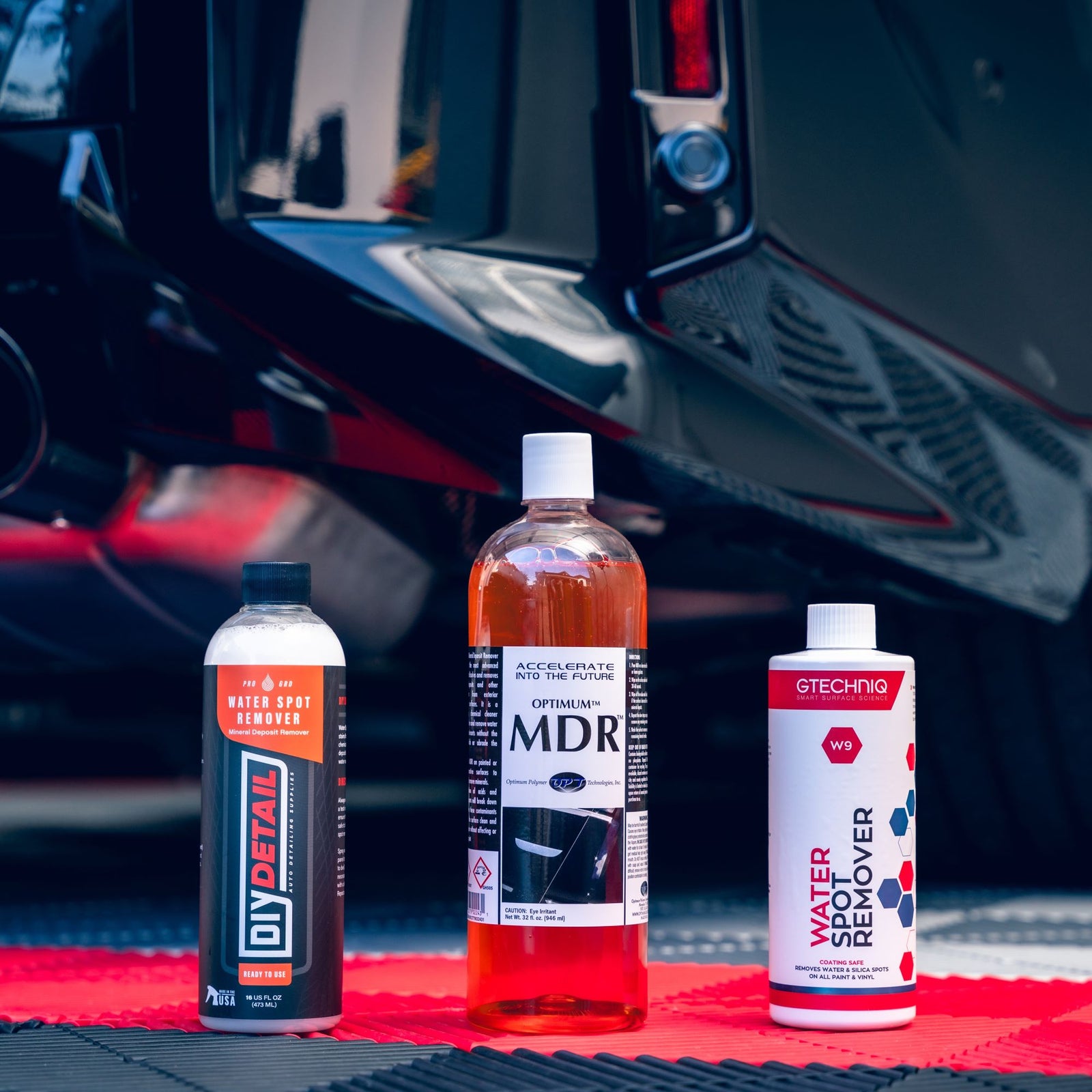
Water spots after drying usually mean water is escaping from traps, mirrors, badges, roof rails, panel gaps and door handles, and then evaporating on the paint. Blow these areas out with a blower or compressed air before your final towel pass, and crack the doors and boot to release water from the seals. In hard water areas, minerals in the rinse water make spotting worse, so dry promptly, work in shade and consider a drying aid which helps water release from the surface. If spots persist, a dedicated water spot remover or acidic wash lifts the mineral deposits safely.
You can, but a twist loop body towel is not the ideal glass tool, its deep pile can leave a faint film or streaks on glass, especially if a drying aid is in use. A waffle weave towel is purpose-built for glass, its low, textured weave finishes streak-free and lint-free. The ideal routine is a twist loop for paint and a dedicated waffle weave for glass and mirrors, kept separate so product residue from the paint towel never transfers to the glass. Dedicated glass towels are inexpensive and make a visible difference.
A clean, quality microfibre drying towel used on properly washed paint will not scratch. Scratches during drying come from three sources: grit left on the panel by an inadequate wash, contamination embedded in the towel itself, and excessive pressure from a towel too small or saturated to absorb efficiently. The fix is a thorough pre-wash and two bucket wash, strict towel hygiene, and a towel with enough capacity that light pressure is all it ever needs. Soft banded or edgeless borders matter too, rough stitched edges on cheap towels are a known scratch source.
Avoid it wherever possible. Direct Australian sun flash-dries rinse water into mineral spots faster than you can towel a panel, and hot paint makes drying aids and detail sprays streak. Wash and dry in shade, early morning or late afternoon, and work top down so water draining from the roof does not re-wet finished panels. If sun is unavoidable, dry one panel at a time immediately after rinsing it, keep the whole car wet until you are ready, and get horizontal surfaces, roof, bonnet and boot, done first because they spot fastest.
Completely dry, clean, and sealed away from dust and lint. A plastic tub with a lid or a dedicated drawer works perfectly. Never store a towel damp, mildew sets in quickly and the smell is very hard to remove, and never store paint towels loose in the boot or garage where they collect dust and grit. Many detailers keep towels sorted by duty, paint, glass, wheels, in separate labelled containers so a wheel towel can never sneak into the paint pile. It is a two-minute system that protects both your towels and your paint.
The price difference is in the fibre and construction. Premium towels use finer split microfibre with higher polyamide content, denser weaving, and soft banded or edgeless borders, all of which cost more to produce than the coarse, loosely woven fibre in bargain towels. The result is more absorbency, safer contact with paint and a towel that survives hundreds of washes instead of dozens. Priced per year of use, a premium towel is usually the cheaper option, and that is before counting the cost of correcting swirl marks that cheap towels cause. Buy once, look after it, and it looks after your paint.
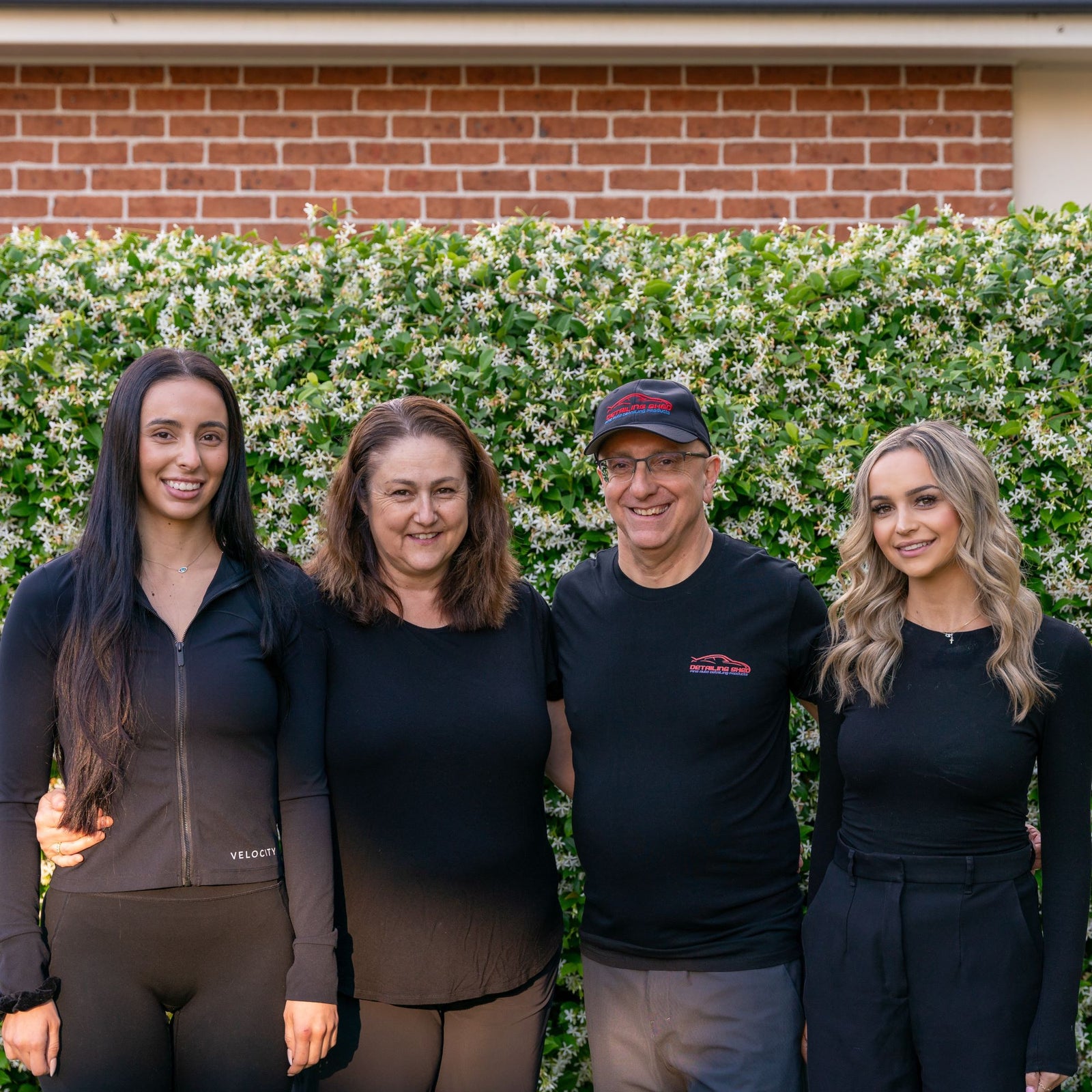
Family run from our Sydney warehouse, stocking gear chosen for Australian water, sun and conditions.
We detail cars ourselves. Ask us which towel suits your vehicle and you will get a straight answer, not a sales pitch.
We stock the towels we would buy with our own money, from manufacturers with a track record.
Orders leave our warehouse quickly so you are drying with better gear by the weekend.
Weekend washers, coating owners and professional detailers across Australia buy their towels here.
Trade and pro detailers get genuine product support from people who use the gear.
Browse the full range of premium car drying towels above, twist loop, waffle weave, plush and hybrid, in sizes from glass towels to XL single-pass dryers for the biggest 4WDs. Pair yours with a drying aid, upgrade your wash with a foam cannon and quality mitt, or read our detailing guides for the full safe wash routine.
Shop Drying Towels