FREE Shipping on orders over $150 (Weight Restrictions Apply)


3.2 hp. 350 L/min FAD. 100 litre tank. 15A supply. The Puma P22-100L delivers the highest output available from a single-phase Puma, roughly 46 percent more air than the P16-100L on the same tank size. The trade-off is a 15A circuit rather than a standard outlet.
Best Puma compressor for a busy detailing workshop on single phase, running pneumatic polishers alongside interior and blow-down work.
| Application | Suitability |
|---|---|
| Blow guns | ExcellentWell suited to typical blow-gun use. |
| Air blow-out and detailing tools | ExcellentAmple headroom for typical detailing work. |
| Tornador-style interior guns | Excellent350 L/min covers continuous use with room to spare. |
| Pneumatic polishers | ExcellentSuitable for sustained single-operator use. |
| Pneumatic sanders | SuitableWorkable for one operator. Check your sander's stated consumption. |
| Multiple air tools at once | SuitablePossible for lower-draw combinations. Contact us with your tool list. |
| High-consumption tools | Check requirementsConfirm the requirement against 350 L/min, or consider three-phase. |
Ratings above are guidance based on the compressor's Free Air Delivery against typical air consumption for each tool type. They are not a performance guarantee. Actual results depend on your specific tools, working pressure, air line setup and how continuously you run them. Check your tool's air requirement before ordering, or get in touch and we will check it for you.
The highest FAD available from a single-phase Puma, and a significant step over the 10 amp models.
Enough stored air to keep pressure steady through sustained tool use.
Sized for continuous trade work rather than intermittent DIY use.
Slow-turning, which keeps operating temperature down and extends pump life.
Reduces heat and wear compared with direct drive at the same output.
A 5 micron filter regulator is fitted as standard, removing dirt and water and giving accurate pressure control, with a Nitto-style coupling on the outlet.
The 240V motor was developed and tested in Australia. Totally enclosed fan-cooled construction keeps dirt and moisture out of the windings.
Solid rubber on steel wheels with ball bearing hubs, rated for all-terrain handling.
Compressor air output is quoted two different ways, and the difference catches a lot of buyers out.
Pump displacement is the volume the pump sweeps on every rotation. It is a theoretical figure and it is always the larger of the two, which is why it often appears first in marketing.
Free Air Delivery (FAD) is the air that actually reaches your tool once losses through the valves, rings and heat are accounted for. This is the number that determines whether your equipment will run properly.
We list FAD as the headline figure on every Puma page. If you are comparing this against another compressor and that one only quotes displacement, you are not comparing like with like. Always ask for the FAD figure.
| Specification | Detail |
|---|---|
| Motor | 3.2 hp / 2.4 kW |
| Pump displacement | 430 L/min (15.2 cfm)Theoretical figure. |
| Free air delivery (FAD) | 350 L/min (12.4 cfm)Use this figure when comparing compressors. |
| Maximum pressure | 800 kPa (115 psi)Ample for detailing tools. If you need 1,000 kPa, see the P14-60L. |
| Tank capacity | 100 Litres |
| Voltage | 240V |
| Phase | Single phase |
| Current | 15 AmpsNot a standard household outlet. |
| Pump model | Puma PG31 |
| Pump speed | 1,080 rpm |
| Pump type | Piston, oil-lubricated, belt-driven |
| Outlet size | 1/4" with Nitto-style coupling fitted |
| Noise level | 77 dB(A)Measured at 1 m per AS 2221.1-1979. |
| Weight | 104 kg |
| Dimensions (L x W x H) | 109 x 49 x 78 cm |
| Warranty | 12 monthsGlenco Air & Power warranty against defects. |
| Delivery | Standard courier, wheeled unit |
A compressor on its own is only the starting point. What reaches your tool depends just as much on filtration and pipework.
Glenco publish a full maintenance schedule for oil-lubricated compressors. Keeping to it is what determines how many years you get out of the pump.
| Interval | Task |
|---|---|
| Daily | Check the oil level and inspect for oil leaks. Drain accumulated condensate from the tank; daily draining is recommended where the compressor is used frequently. |
| Weekly | Check or clean the air filter, test the safety valve, inspect for air leaks. |
| Monthly | Check the V-belt, tighten fasteners, clean the unit. |
| 3 months or 500 hours | Replace the oil. |
| 12 months or 2,000 hours | Replace the air filter. |
| 2 years or 4,000 hours | Replace the filter-regulator and V-belt. |
Consumables including filters, lubricants and V-belts are not covered by warranty. Service intervals should be shortened in harsher working conditions.
| Model | FAD | Tank | Power | Max pressure | Best for |
|---|---|---|---|---|---|
| P14-60L | 210 L/min | 60 L | 240V 10A | 1,000 kPa | Mobile detailing and home garages |
| P16-100L | 240 L/min | 100 L | 240V 10A | 800 kPa | Most air available on a standard 10A outlet |
| P18-100L | 320 L/min | 100 L | 240V 15A | 1,000 kPa | When you need 145 psi on single phase |
| P22-100L | 350 L/min | 100 L | 240V 15A | 800 kPa | Most air available on single phase |
| P22-120L | 350 L/min | 120 L | 240V 15A | 800 kPa | Sustained use, largest single-phase tank |
| P30 415V | 520 L/min | 140 L | 415V 3ph | 1,000 kPa | Multiple operators, entry three phase |
| P55 415V | 1,055 L/min | 265 L | 415V 3ph | 800 kPa | High-volume multi-bay workshops |
Free air delivery is the figure to size your tools against. Higher pressure and higher flow are a trade-off at each amp rating, so pick based on what your tools actually require.
350 L/min free air delivery (12.4 cfm) at up to 800 kPa (115 psi). That is the highest FAD available from a single-phase Puma. If you need 1,000 kPa (145 psi), the P18-100L is the high-pressure alternative at 320 L/min.
Free Air Delivery, the usable air reaching your tool. Pump displacement is the theoretical swept volume and is always a larger number. FAD is what you should compare.
Blow guns, detailing tools, interior cleaning guns and pneumatic polishers comfortably. Sanders are workable for a single operator. For high-consumption tools, check the specific requirement first.
That depends on which tools and how continuously they run, so we do not publish a fixed number. Send us your equipment list and we will size it properly.
240V single phase on a 15 amp circuit. This is not a standard household outlet and uses a physically larger plug. If you do not have one, a licensed electrician will need to install it.
Yes, and it is the strongest single-phase option for a busy detailing operation. A 5 micron filter regulator is fitted as standard. For paint, coating or PPF work, add a suitable coalescing filter downstream to reduce oil aerosol.
Delivery is charged at cost. Contact us with your postcode for a freight quote.
The compressor itself does not, but the 15 amp circuit does if you do not already have one.
Glenco Air & Power provide a 12 month warranty against defects in material and workmanship from the date of original sale. Electric motors carry whatever warranty the motor manufacturer provides. Consumables including filters, lubricants and V-belts are not covered, nor is normal wear and tear. Keep your tax invoice as proof of purchase.
Glenco publish a full schedule. Daily: check the oil level, inspect for oil leaks and drain the air tank. Weekly: check or clean the air filter, test the safety valve and inspect for air leaks. Monthly: check the V-belt, tighten fasteners and clean the unit. Every 3 months or 500 hours: replace the oil. Every 12 months or 2,000 hours: replace the air filter. Every 2 years or 4,000 hours: replace the filter-regulator and V-belt.
Not sure which Puma compressor is right for your tools? Compare the range above, or use our Air Line Configurator to size the whole system.
Plan Your Air Line Compare All Puma CompressorsPlease allow extra time for delivery to regional and remote areas.
Free Shipping on orders over $150 excluding remote areas and certain weight restrictions apply for free shipping in each state. Trade accounts $250 minimum for free shipping.
The following qualifies for free shipping:
For orders with free shipping, we determine whether to use a courier service or Australia Post based on the address. If you prefer your order to be shipped via Australia Post, please select the "Parcel Post" option at checkout.
Note: We do not ship to PO Boxes or Parcel Lockers with free shipping.
If your parcel is returned to us, the following conditions outline when additional shipping costs may apply:
*We will not be held responsible for delays or late delivery of Australia Post or courier services.
*If a parcel does not arrive as anticipated, please allow 5-7 working days for Australia Post or couriers to complete process of tracking and locating as in most cases it turns up after 3-7 days of expected delivery. We cannot refund or send another item until this process is completed.
*We don't take responsibility for orders that are lost or stolen once the parcel has been delivered to the correct delivery address.
*Items that are over 21kg may require to pay extra freight costs if in regional or remote areas - we will contact you if this is the case.
All of our prices are in Australian dollars (AUD) and include GST (Goods and services tax)
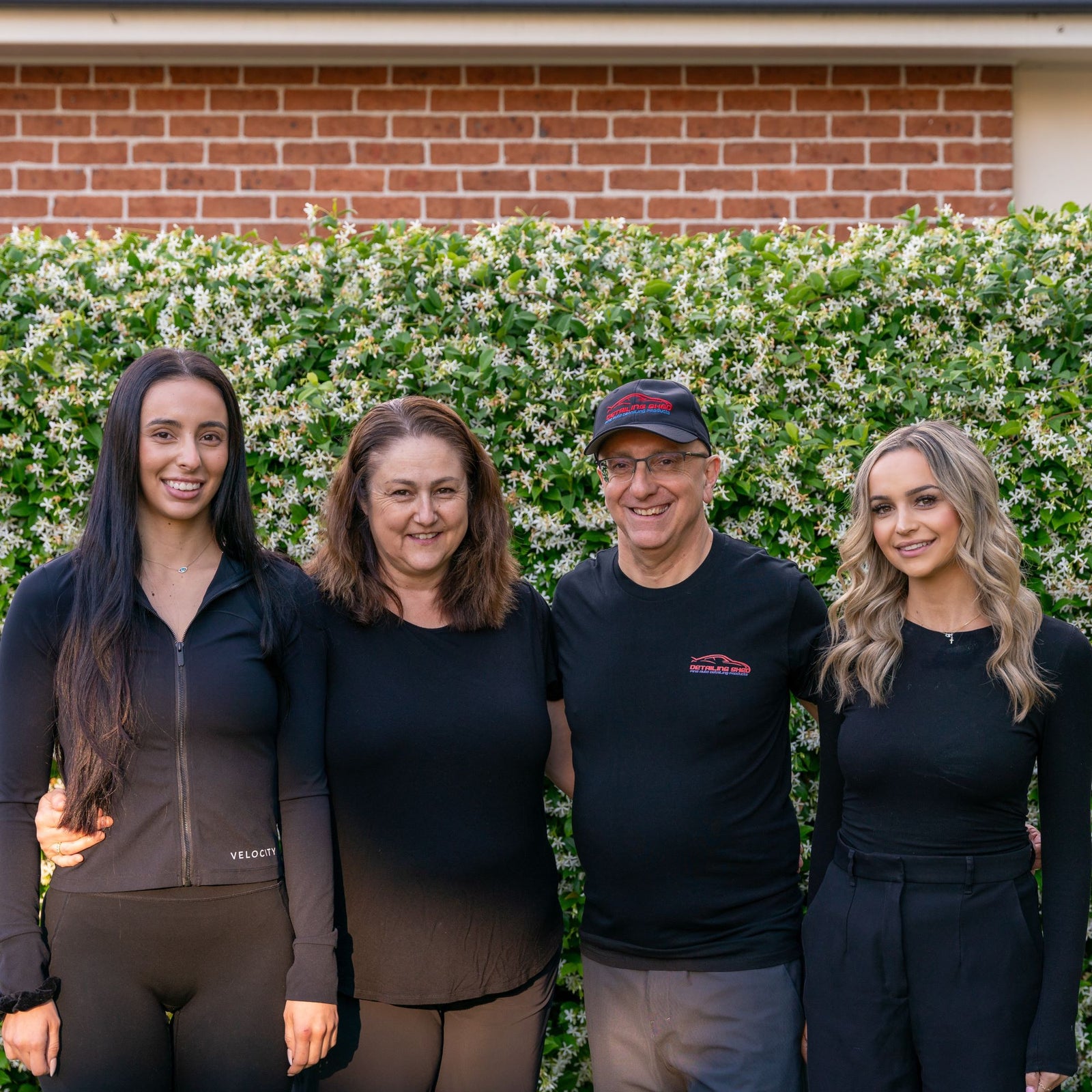
At Detailing Shed, we're a family-owned business that genuinely wants you to be happy with your purchase.
If something isn't right, please contact us before returning anything. In many cases, we can help resolve the issue with product advice, troubleshooting, or support from our team.
This policy explains how returns, refunds and warranty-related claims are handled while respecting your rights under Australian Consumer Law.
Nothing in this policy limits or replaces your rights under Australian Consumer Law.
If a product has a major or minor failure, you may be entitled to a remedy under Australian Consumer Law. The terms below primarily apply to change-of-mind purchases and circumstances not covered by consumer guarantees.
We may accept approved change-of-mind returns subject to the following conditions:
To request a return, email info@detailingshed.com.au with:
Due to safety, hygiene, freight and manufacturer restrictions, the following products are not eligible for change-of-mind returns:
These products cannot be returned for change of mind unless required under Australian Consumer Law.
With prior approval, we may accept returns on unused and unopened items such as:
Please contact us before sending anything back.
If you believe a product isn't performing correctly, please contact us before returning it.
To help us assess the issue, please provide:
In some cases, we may ask you to return the product for inspection.
If testing shows the product is operating as intended, the matter may be treated as a change-of-mind return and the standard conditions above may apply.
Products excluded from change-of-mind returns remain ineligible for return where no fault is found.
For orders shipped to New Zealand, customers are responsible for return shipping costs when sending back:
This applies to inspections, repairs and warranty-related claims.
Due to the high cost of international freight, we are unable to cover these return shipping costs.
If you've ordered the wrong item, you're welcome to return eligible products under this policy and place a new order for the correct item.
If you're unsure which product is right for you, our team is happy to help.
Orders can be cancelled before they have been processed or dispatched.
Approved cancellations will be refunded to the original payment method less a 3% payment processing fee.
Once an order has been processed or shipped, it can no longer be cancelled. However, eligible items may still be returned under our Change of Mind Returns policy.
If your order arrives damaged, incorrect or faulty, please contact us within 10 days of delivery.
Email info@detailingshed.com.au and include:
We'll work with you to assess the issue and determine an appropriate resolution.
If your parcel appears to be missing, we'll work with the carrier to investigate.
Please allow 7-15 business days for the investigation to be completed before a resolution can be finalised.
Manufacturers occasionally update packaging, labels and colours without notice.
As a result, the product you receive may vary slightly from the images shown on our website. This alone does not constitute a fault provided the correct product has been supplied.
Discount codes must be applied during checkout.
Unfortunately, discounts cannot be applied retrospectively and we cannot refund the difference after an order has been placed.
If you're experiencing issues with a discount code, please contact us before completing your purchase.
We're always happy to help.
Email: info@detailingshed.com.auinfo@detailingshed.com.au
When contacting us, please include:
Our team will do their best to resolve your enquiry quickly and fairly.
We're here to help
If you need to contact us for advice on any of the products, please email us at info@detailingshed.com.au
Please include description of the product you are interested. Some info of you car, and also what you are trying to achieve.
We may also review our blogs for product recommendations.