











From carpets to seats, glass to screens, dashboards to door trims - this guide covers everything you need to keep your car's interior clean, protected, and smelling its best. Whether you're maintaining a daily driver or a weekend car, this step-by-step process is tried and tested.
Why Is Car Interior Cleaning Important?
Considering how much time we spend in our cars, it only makes sense to have your interior looking, feeling, and smelling fresh. Regular cleaning and maintenance not only makes the space nicer, but also helps protect and extend the life of the various interior surfaces in general. The byproduct of that is stronger resale when it comes time to sell.
The best way to approach interior cleaning and maintenance is regularity. Stay on top of it and you'll eliminate the need for heavy-duty rescue cleaning sessions. A little, often, goes a long way.

Tools & Supplies
Towels: You will need three different towels for interior cleaning:
- Plush/delicate surfaces: The Rag Company Creature Edgeless.
- General all-round cleaning: Maxshine Premium Edgeless Microfibre All purpose
- Glass-specific towels: The Rag Company Dry Me A River. This is important to reduce streaking and linting.
Applicators: For applying interior dressings or protectants, the Maxshine Exterior and Interior Applicator is a simple, effective choice.
Brushes:
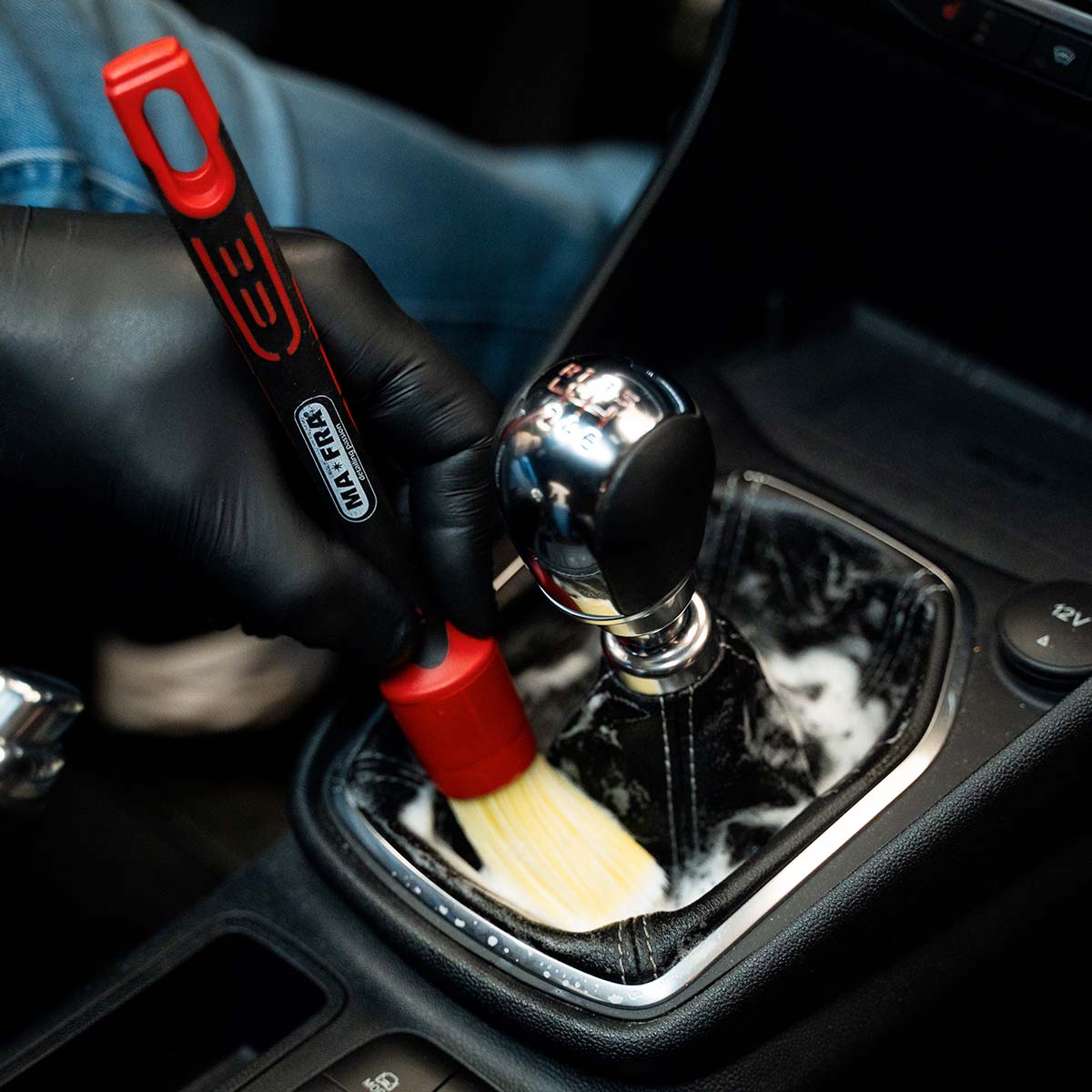
- General Cleaning Brushes: A firmer boar's hair brush for less delicate surfaces. A softer synthetic bristle brush for more delicate areas, especially good at dusting air vents and gloss trims.
- Carpet Brush: Labocosmetica Floor Carpet Brush tackles stubborn dirt with brass bristles.
- Leather Brushes: Dedicated brush for leather and vinyl surfaces which Maxshine Car Cleaner Brush or Geist Leather & Textile Cleaning Brush would be good for.
Scrub Pad: The Maxshine Interior Scrubbing Sponge is a firm-but-gentle dual-sided sponge.
Nice-to-Have Extras:
- Small Brush Set (Great for cleaning pedals)
- Pet Hair Remover (Game changer if you have animals)
- Detail Factory Tyre Brush (Brilliant on rubber floor mats and liners, trust me!)
- Stoner Reach & Clean Tool: Must-have for hard-to-reach windscreens, especially for Mustang owners.
Choosing the Right Interior Cleaning Products
Interior Cleaners:Interior cleaners are your go-to for moderate-to-heavy cleaning duties. The key is choosing a pH neutral formula that's effective but safe across multiple surfaces - including leather, vinyl, and plastic.
Our picks: GTECHNIQ I2 Tri-Clean, P&S Xpress Interior & Labocosmetica OMNIA 2.0
Interior Quick Detailers: Offering just the right blend of cleaning ability and a small amount of UV protection. Armour Pilot is a great option.
Carpet, Cloth & Textile Cleaners: Most car interiors come with leather/vinyl trim these days, but it's still good to have a carpet/cloth cleaning product on hand. Sonax Upholstery Cleaner is another great option.
Interior Protectants: While interior detailers contain some UV protection, interior protectants are more substantial. If you park your car outdoors a lot in summer, these products are a must. Optimum Protectant Plus Interior is a good product for this.
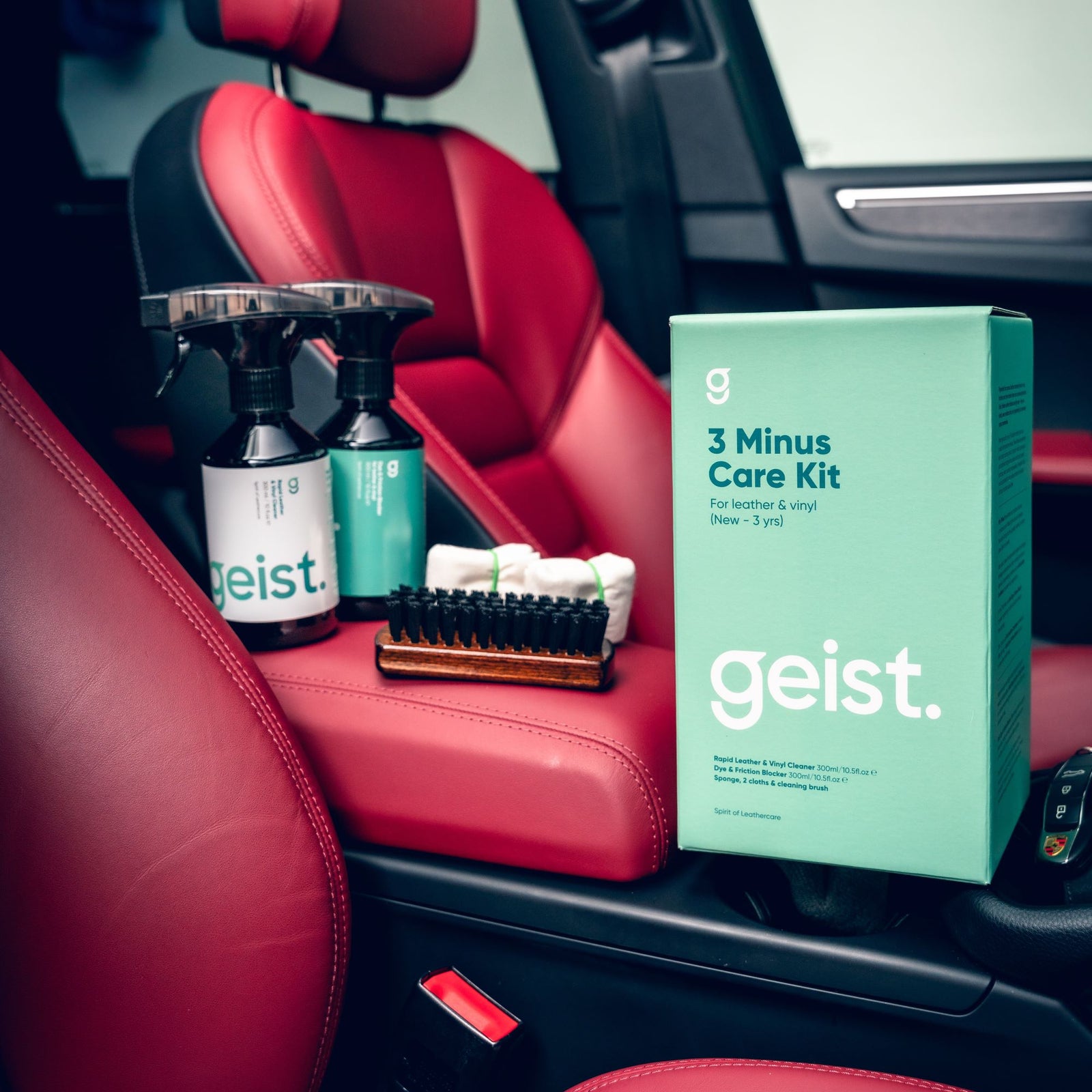
Leather Cleaners: Car leather interiors are often a blend of natural and synthetic (vinyl/vegan) leathers. As such, it’s important to choose products that cater to this, meaning they are safe to use on natural leather, but still effective at cleaning synthetic materials. Geist leather cleaners have been designed for user and material safety.
Leather Conditioners: These products need to cater towards mixed materials, with the goal of protecting, enhancing and nourishing leather and leather-like surfaces. Geist Leather Conditioner excels here.
Glass Cleaners:You want an ammonia free, alcohol-based product here. These are safer on window tinting and plastic interior surfaces. Bilt Hamber Traceless give the best results.
Air Freshener’s and Odour Eliminators: These serve different purposes: an air freshener adds fragrance, an odour eliminator neutralises the source at a molecular level.
How To Clean Your Interior – The Process.
-
Step 1 - Remove & Vacuum floor mats: Remove the floor mats and any larger debris or litter. For carpet mats, shake them out and vacuum thoroughly.
-
Step 2 - Vacuum the Interior:Vacuum the carpets, moving the seats forward to gain sufficient access to the rear footwell. With the vacuum in one hand, have a soft brush in the other to agitate dust from cracks and crevices, especially air vents and door trims, sucking the dust into the vacuum during the process. This method also works on gloss trim and leather seats. Having a couple of different vacuum attachments is crucial here, allowing you to swap to suit different areas and surfaces. You may also use the pet hair brush to gather hair into a point, then sucking it up with the vacuum.
- Using an interior cleaner and a towel, start working your way around the interior. Starting with the dashboard and door trims, spray the product into the towel before wiping, then work your way down to the centre console, sills and footwell areas. If your interior is dirtier, then you can spray directly onto the surface and use a scrub pad or brush to agitate before wiping. Be careful where you spray these products, making sure to not target buttons and switches. Use an interior cleaner for dirtier interiors, otherwise an interior detailer is best suited for weekly maintenance.

- Now focus on your seats.
Leather and Vinyl - for a more intense clean, spray a leather cleaner onto a leather brush or directly onto the surface, agitate with the brush and wipe with a towel. Once clean, apply your chosen leather protectant. If your leather is already somewhat clean and protected, then give these surfaces a quick wipe with a damp towel or your interior detailer. For more information on how to clean leather seats click here.
Cloth and Alcantara – in most cases, you are maintaining these with a vacuum, but if you need to deal with stains, then apply a small amount of upholstery cleaner, agitate with a brush, then gently wipe the area with a damp towel. It’s very important to use the damp towel to remove the emulsified dirt/ product residue from the fibres.
- (Optional) Apply a protectant to the various plastic surfaces using a towel or microfiber applicator.
- With the interior clean, now focus on the glass. Best results are achieved with specific glass or waffle weave towels. For interior glass, spray the glass cleaner directly onto the towel and not the glass itself, this avoids getting glass cleaner on freshly cleaned surfaces.
Wipe the glass, then follow up with a clean, dry towel to produce a streak free finish. For grotty/neglected glass, flip or swap out your towels often to avoid smearing/transferring grime from window to window. You may also find repeating the process necessary. Wipe the rear vision mirror, gauge cluster and infotainment screens at this step.
-
Refit the floor mats and mist your chosen air freshener or odour eliminator on your carpets/mats.
Tips, Tricks and What to Avoid
- Avoid using an all-purpose-cleaners (APC). These products are typically alkaline and offer a level of cleaning ability that is not necessary for interiors. Prolonged use of APC’s can cause premature wear and potential long-term damage.
- Choose cleaners and protectants formulated for interior surfaces.
- Rinse-less wash products can also be used for interior cleaning and maintenance, offering a super safe and gentle cleaning solution for plastic and leather/vinyl trim. We often use Optimum No Rinse as an interior quick detailer, offering just enough cleaning/dusting ability without stripping out any protectant that we may have previously applied.
- Compressed air can be helpful in dislodging dust, debris and sand from hard-to-reach areas. It can also assist in lifting stubborn sand out of carpet and floor mats, allowing it to be more easily removed with the vacuum.
- Another helpful tip is to use an anti-static product like P&S Paint Gloss as a “vacuum aid”. While Paint Gloss was designed for exterior surfaces, it works wonders here on stubborn carpets.
- Have a good supply of towels, you will use more than you think, especially if dealing with neglected interiors and glass.
- Never attempt cleaning glass while it is hot or warm to touch. The result will be a foggy, smeary mess. For best results, glass should be cool or cold to touch before attempting to clean.
Q&A
Can I use household interior cleaners?
No. Household cleaning products are too harsh for car interiors, especially vinyl and plastic surfaces. Car-specific cleaning products have been designed to be safe and effective, meaning that you get the best results possible without causing damage.
How often should I clean my leather seats?
It depends on use. On average, leather is best cleaned and protected every 4 to 6 months. If your car is a weekender, that would extent to every 12 months. For a vehicle getting heavy use, then every 2 to 3 months is ideal.
Why do I always get streaks in my glass?
In this case, look at the type of towels you are using, the temperature of the glass and the glass cleaner in question. Always clean glass when it is out of direct sunlight and cool to touch, use a dense/low nap towel and an alcohol-based glass cleaner. If the glass is dirtier than usual, repeat the process with a clean set of towels.
Can I apply a dressing to rubber floor mats?
Most plastic/rubber dressings create a slick finish that's unsafe underfoot. Look for products specifically designed for rubber surfaces that won't leave a slippery result. Apply only to clean, dry surfaces.
Final Thoughts
Cleaning your car's interior can be time-consuming, but with the right products and a consistent routine, staying on top of it becomes straightforward. Work systematically, use surface-appropriate products, and don't let things build up between cleans.
Shop all interior detailing products atDetailing Shed - including our full range ofLabocosmetica,ARMOUR Detail Supply,Optimum,Maxshine,Geist, andPlatinum Potions products.