










How to Ceramic Coat a Brand New Subaru Forester: The Complete Australian Guide
Everything you need to know about ceramic coating a new car in Australia, based on a brand new Forester we coated with Armour Detail Supply Ceramic Coating PRO 5 Year, from preparation through to long term maintenance.
This guide walks you through the exact process we use to ceramic coat a brand new Subaru Forester, using Armour Detail Supply Ceramic Coating PRO 5 Year. The same process works on most other new vehicles too.
This guide is based on a brand new Subaru Forester we ceramic coated here at Detailing Shed, walking through the exact process we ran on that car, not a generic new car checklist. Even a car with delivery kilometres only benefits from proper surface preparation, because the coating bonds to whatever is already on the paint.
The Forester's front and rear bumpers, along with the wheel arch cladding, are finished in a textured black plastic that fades if left uncoated, so we treat those panels separately rather than skipping them.
Quick summary
- Vehicle: Subaru Forester
- Difficulty: Intermediate
- Time required: 5 to 8 hours
- Protection: Up to 5 years
- Coating used: Armour Detail Supply PRO 5 Year

Why does new car paint still need protection?
A common question we get asked is whether ceramic coating a new car is really necessary, or whether it's better to wait a few months first. Here's what actually happens to a car's paint before it reaches you.
New car paint protection matters more in the first few weeks of ownership than at almost any other point in the car's life. From the moment a vehicle leaves the factory, its paint is exposed to a chain of handling, transport and storage steps that most owners never see, and each one can leave a mark.
Most new Foresters sold in Australia arrive by ship, then travel by rail or road to a regional compound before reaching the dealership. Rail dust, a fine iron particulate thrown off by train brakes and wheels, is one of the most common forms of contamination on brand new vehicles, and it's often invisible until an iron remover is applied and the tell tale purple bleeding reaction appears. Salt air during shipping, industrial fallout at the port, and general road grime during transport all add to the layer of contamination sitting on top of factory fresh paint.
Dealership pre delivery washing doesn't help either. Cars are often run through the same wash bay dozens of times a week, sometimes with recycled water, aging brushes, or towels that have already picked up grit from the last vehicle. This is one of the most common causes of the light swirl marks and wash marring we find on cars with only delivery kilometres on the clock, and it's a big part of why we don't recommend skipping the prep stage of this guide, no matter how new the car looks.
Brand new paint also isn't the blank canvas it appears to be. Clear coat straight from the factory can carry oils from the application process and minor inconsistencies that are invisible until you run an iron remover or a clay treatment over the surface. A ceramic coating bonds to whatever is sitting on top of the paint, which is exactly why proper decontamination and paint correction come before application, not after. Skipping this step is the single biggest reason DIY ceramic coating results fall short of what the product is actually capable of.
If you're asking yourself should I ceramic coat my new car, the short answer is yes, and as early as possible. Australia's harsh UV levels, wide temperature swings and long dry spells between rain make ceramic coating Australia's climate almost tailor made for. Whether you choose a DIY ceramic coating kit or have the best ceramic coating for a new car applied by a professional, the goal is the same: protect new car paint before the first wash, rather than after months of contact washing have already introduced fine scratches. This guide focuses on the DIY approach, using the exact process and Subaru paint protection products we ran on this Forester.
Products used in this Subaru Forester detail
The five products doing the heavy lifting in this guide. The full product list, including wash and prep items, is further down the page.
Key products
- Armour Detail Supply Ceramic Coating PRO 5 Year
- Armour Detail Supply Iron Remover
- Labocosmetica Fiero Polish
- Buff and Shine Uro-Tec Black Finishing Pad
- Armour Detail Supply Panel Prep
The prep process: getting a new Forester ready to coat
Your coating is only as good as your prep. The product won't hide defects or bond properly to a contaminated or oily surface, so take your time and do it right. Here's the five stage process we run before any coating goes on.
Wash the car thoroughly
Starting with a clean car is essential.
- Spray Armour Detail Supply Wheel Cleaner on the rims, then Tyre Cleaner on the rubber. Agitate with a Detail Factory Tire Brush, EZ Detail Wheel Brush (Large) or Detail Factory Boar's Hair Brush (24cm).
- Pre-wash the paint with Armour Detail Supply Decon Soap using a foam cannon, dwell a few minutes, then rinse.
- Contact wash with Armour Detail Supply Shampoo+ and a Maxshine Micro Chenille Wash Mitt, top to bottom, two bucket method.
- Rinse thoroughly and dry with a soft, high quality microfibre drying towel.
Decontaminate the surface
Even new cars can have embedded iron particles from transport or brake dust.
- Spray Armour Detail Supply Iron Remover over the entire body.
- Let it dwell and react, watch for the purple bleeding effect, then rinse thoroughly.
Why this step matters
Skipping iron remover is one of the most common reasons a coating fails early. Iron particles sit under the coating and continue to oxidise, which shows up later as a rough, contaminated feeling surface even though the coating itself is intact.
Want more detail?
Read our full guide: How to Prepare and Decontaminate Your Car.
Prepare the vehicle
To maximise effectiveness and ease of application.
- Move the car into a shaded or undercover area, a garage or carport is ideal.
- Set up your lighting to see the paintwork clearly. We used a Scangrip Light.
- Tape off trim, badges and seals. On the Forester, mask the black plastic cladding if you're not coating it in the same session, since overspray is easy to miss and hard to correct once cured.
Correct the paint
Light swirl marks or dealership handling marks are common, even on a new Forester.
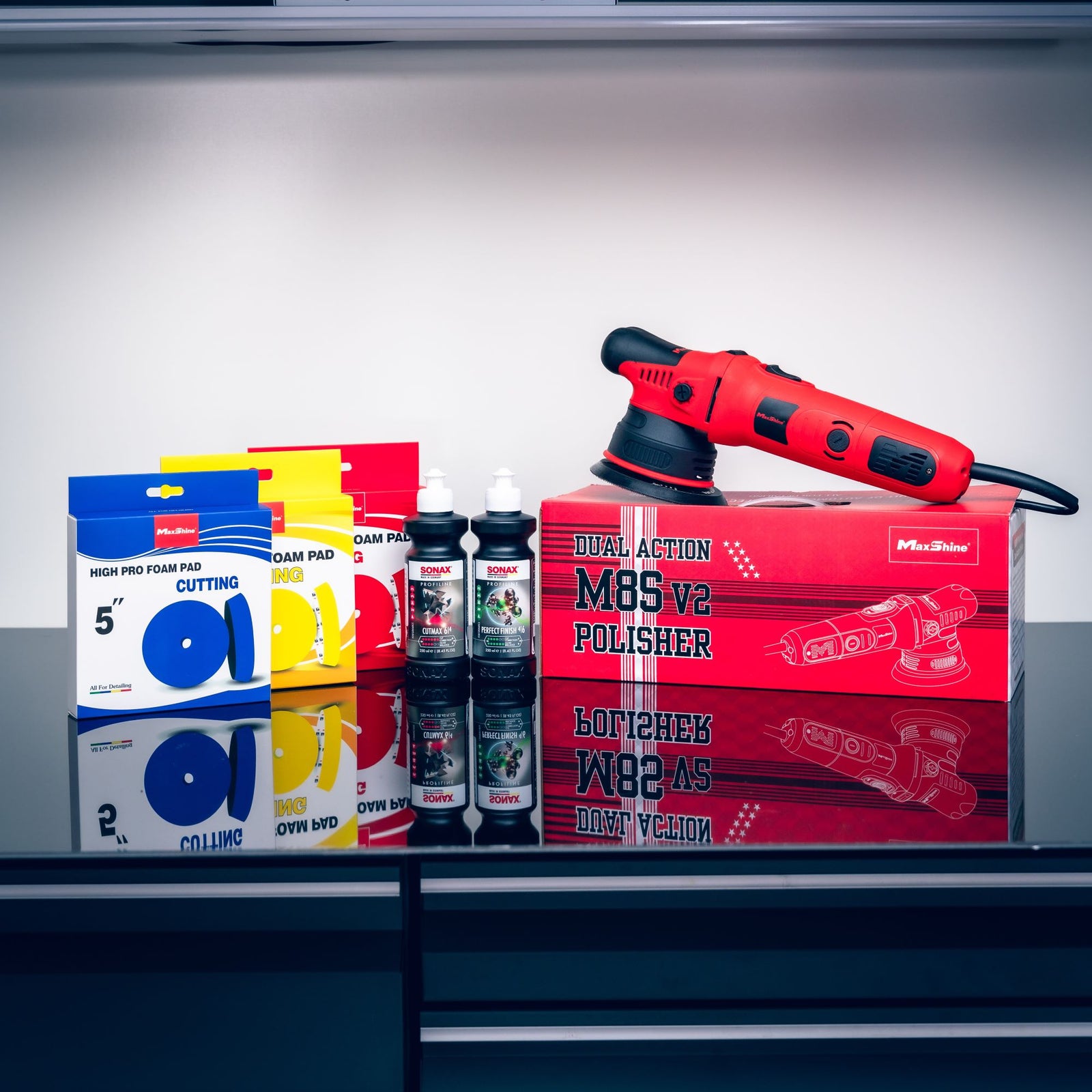
- Polish with Labocosmetica Fiero Polish and a Buff and Shine Uro-Tec Black Finishing Pad.
- Work panel by panel with a dual action polisher. We used a Maxshine M15 PRO 5 inch and a Mirka Cordless Polisher AROP-B 312NV 3 Inch.
Why polishing improves durability
A coating applied straight over swirl marks and marring will simply lock in those defects under a glossy layer. Polishing first means the coating bonds to a level, defect free surface, which is part of why properly corrected paint holds its gloss and beading noticeably longer than paint that was coated without correction.
New to polishing?
Read our guide: How To Polish A Car.
Panel prep
This step ensures the surface is bare and clean for coating.
- If you polished with Fiero, you're good to go. It contains a primer for coatings.
- If you used another polish, apply Armour Detail Supply Panel Prep twice for a squeaky clean, oil free surface.
Why panel prep matters
Polishing oils left on the surface act as a barrier between the coating and the paint. Panel prep strips those oils so the coating bonds directly to the clear coat rather than to a thin layer of residue that will eventually break down and take the coating with it.

What we found on this Forester
Despite being delivered brand new, the paint still showed light iron contamination and minor wash marring consistent with dealership preparation.
The contamination was not obvious under normal lighting but became visible during the iron removal stage, when the reaction turned the panels a faint purple. That reaction is the clearest sign of how much contamination sits on paint that looks perfectly clean to the naked eye.
After polishing with Labocosmetica Fiero, gloss and paint clarity improved noticeably before Armour PRO 5 Year was applied.
This reinforces an important lesson: even brand new vehicles benefit from proper preparation before ceramic coating.


Products used in the prep stage
If you're following this process yourself, these are the exact products we used on this Forester through the prep stage.
If this is your first ceramic coating application, check out our complete guide: How To Apply Ceramic Coating.
Why Ceramic Coat a Subaru Forester?
A ceramic coating adds a durable, sacrificial layer over the paint. On a Forester that spends time outdoors or under trees, the day to day benefits add up quickly.
Key benefits
- UV protection against fading and oxidation
- Easier cleaning and reduced wash time
- Resistance to bird dropping etching
- Resistance to tree sap staining
- Improved gloss and depth to the paint
- Reduced ongoing maintenance
Application: coating a brand new car like a pro
The actual application is simple once the prep is done properly. Work methodically, one or two panels at a time.
Prime the applicator
- Shake the bottle and apply 3 full lines of coating to a fresh applicator block.
- For each panel after, you'll only need a small top up. A little goes a long way.
Apply to 1 to 2 panels at a time
- Start with an "X" pattern, then outline the edges of the panel ("box it in").
- Fill in the area with small, overlapping circular motions, like applying wax.
- Let it set for 1 to 5 minutes depending on temperature and humidity. 2 to 3 minutes is typical.
- Look for small, uniform sweat beads before wiping off.
Level and buff
- First wipe with a short nap or pearl weave microfibre. Level 95% of the coating with light pressure. You'll feel slight grab, that's normal.
- Second wipe with a plush microfibre for the final buff. Inspect for high spots or streaks under light.
- Flip to a clean towel face every second panel, and swap your applicator block once it starts to stiffen.
Optional second coat. Armour Quartz Coating is designed for single layer protection, but it can be layered. Wait 1 to 2 hours between coats.
Products used in the application stage
- Armour Detail Supply Ceramic Coating PRO 5 Year
- Fresh applicator block
- Short nap or pearl weave microfibre towel
- Plush microfibre finishing towel
If you're following this process yourself, these are the exact products we used on this Forester during application.
Aftercare and ongoing maintenance
Curing is where the coating actually develops its durability, and how you maintain it afterwards is what determines whether it reaches its full lifespan. Don't rush either part.
Let the coating cure for at least 12 hours before exposing it to water. After 4 hours, you can apply Armour Detail Supply AMPLIFY or a ceramic spray sealant to help protect the surface during the curing phase. Avoid washing or using any chemicals for 7 days to allow full curing.
The first wash after coating
Wait the full 7 days before the first wash. Use a pH neutral, ceramic safe shampoo rather than anything with added waxes or gloss enhancers, and avoid automated car washes with brushes, which are one of the fastest ways to introduce fine scratches into a fresh coating.
Safe washing methods long term
Stick to the two bucket method with a quality wash mitt, and pre-foam with a foam cannon before any contact touches the paint. This lifts the bulk of the dirt off before you introduce a mitt, which is the single biggest factor in avoiding new swirl marks on a coated car.
Drying without adding swirls
A dedicated drying towel reduces the risk of water spotting and drag marks compared to letting the car air dry or using an old bath towel. On a coated car, water should sheet off easily, so drying is faster than it was before, but it's still worth doing properly.
Maintenance sprays and boosting the coating
A periodic ceramic detail spray or topper between full washes tops up the surface's hydrophobic properties and adds a small amount of extra gloss and slickness. It's not a substitute for the base coating, but it helps the coating look and perform its best between major maintenance sessions.
Annual decontamination
Even a coated car picks up embedded contamination over time. An annual, or twice yearly, treatment with an iron remover keeps the coating's surface clear, and a light clay bar treatment can be added if the paint starts to feel rough, though this should be done cautiously on a coated surface using a dedicated clay lubricant.
Water spotting
Ceramic coating helps water sheet off the surface, but it doesn't stop water spots forming if water is left to dry on the paint in direct sun. Dry the car properly after every wash and after rain where possible, particularly in hard water areas.
Bird droppings and tree sap
The coating buys you time, but not indefinitely. Remove bird droppings and tree sap as soon as practical with a proper wash rather than scraping or wiping dry, since both are acidic and can etch into paint if left for extended periods, coated or not.
If your coating loses its beading performance over time, it doesn't necessarily mean the coating has failed. Learn more here: Why Your Ceramic Coating Stopped Beading.
Products used for ongoing maintenance
If you're following this process yourself, these are the product categories we'd reach for to keep this Forester's coating performing long term.
How Much Does It Cost to Ceramic Coat a Subaru Forester?
Pricing varies by coating brand, vehicle condition and how much correction work is needed, so treat the figures below as general guidance rather than an exact quote.
DIY costs
A DIY ceramic coating kit typically involves a few cost categories: the coating itself, decontamination and wash chemicals, polishing consumables, and application accessories such as applicators and microfibre towels.
Coatings in the Armour PRO 5 Year category are commonly sold in 30 to 50ml bottles, generally enough for one to two mid sized vehicles. Add iron remover, a decontamination shampoo, a finishing polish and pad, panel prep, and a handful of quality microfibre towels, and a realistic total for a first time DIY kit sits in the low hundreds of dollars. Most of that cost is reusable across future details rather than a one off expense, since a single bottle of shampoo, iron remover or polish will last many washes and multiple vehicles.
Professional ceramic coating pricing
Professional ceramic coating in Australia varies considerably depending on the level of paint correction required, the coating brand and durability tier chosen, and the detailer's experience and reputation. Single stage coatings on an already well prepped new car sit at the lower end of the market, while multi year, multi stage coatings with full paint correction included command a higher price.
As a rough guide, professional ceramic coating packages in Australia commonly range from a few hundred dollars for an entry level coating on a clean car, up to well over a thousand dollars for a premium multi year coating with significant correction work. The biggest driver of price is almost always how much correction the paint actually needs, not the coating itself. For an exact quote on your Forester, get in touch directly, since pricing depends heavily on the individual car's condition.
Dealership Paint Protection vs Ceramic Coating
Many new Foresters are offered a paint protection package at the point of sale. Here's how that typically compares to an independently applied ceramic coating like the one in this guide.
| Feature | Dealership applied protection | Independently applied ceramic coating |
|---|---|---|
| Preparation | Often minimal, sometimes no paint correction before application | Full decontamination and paint correction before coating |
| Durability | Commonly 1 to 2 years, often a sealant or entry level coating | Up to 5 years depending on the coating chosen |
| Maintenance | Usually minimal specific guidance provided | Benefits from correct wash products and periodic maintenance |
| Value | Frequently bundled into finance at a premium price | Typically better value per year of protection |
| Application quality | Varies widely by dealership and technician on the day | Consistent process with dedicated preparation time |
| Warranty | Sometimes backed by a paint protection warranty product | Durability is dependent on the coating manufacturer's warranty |
| Long term performance | Gloss and beading often noticeably fade within the first year | Maintains gloss and hydrophobic properties for years with correct care |
Why we chose Armour PRO 5 Year
For this Subaru Forester we selected Armour Detail Supply Ceramic Coating PRO 5 Year for its gloss, chemical resistance and long term durability, while still being approachable for experienced DIY detailers.
| Feature | Armour PRO 5 Year | GTECHNIQ CSL | Feynlab Ceramic Lite |
|---|---|---|---|
| Durability | Up to 5 years with correct preparation and maintenance. | Up to 5 years | 1+ year |
| Cure time | 12 hours, cures further for 7 days | 12 hours, cures further for 7 days | 24 hours, cures further for 7 days |
| Applicable surfaces | Paint, PPF, vinyl wrap, chrome, plastic, wheels | Paint | Paint |
| Best for | Daily driven vehicles wanting multi surface protection | Maximum durability and gloss on paint | First time coaters on a budget |
Our recommendation
Confident DIY, take it slow
Follow the prep steps in order and don't rush decontamination or panel prep. A finishing polish and Fiero primer combination is forgiving and hard to get wrong.
Get it professionally applied
If you can't work out of direct sunlight in a dust free area, or don't have the time to do the prep properly, a professional application will give a more consistent result.
If you're comparing options, read our guide to the best ceramic coatings for cars.
Get the coating that actually suits your Forester
Skipping prep is the single biggest reason DIY coatings underperform. Tell us your budget, how the car is used and stored, and how much durability you want, and we'll recommend the right product rather than the most expensive one.
Full product list
Every product used in this Subaru Forester detail, wheels and tyres through to the coating itself.
Everything used in this guide
- Armour Detail Supply Wheel Cleaner
- Armour Detail Supply Tyre Cleaner
- Detail Factory Tire Brush
- EZ Detail Wheel Brush Large
- Detail Factory Boar's Hair Brush 24cm
- Armour Detail Supply Decon Soap
- Armour Detail Supply Shampoo+
- Maxshine Micro Chenille Wash Mitt
- Armour Detail Supply Iron Remover
- Labocosmetica Fiero Polish
- Buff and Shine Uro-Tec Black Foam Pad
- Armour Detail Supply Panel Prep
- Armour Detail Supply Ceramic Coating PRO 5 Year
Frequently asked questions
How long does Armour Detail Supply Ceramic Coating PRO 5 Year last?
Up to 5 years with correct preparation and maintenance.
Is it worth ceramic coating a brand new Subaru Forester, or should I wait?
No, coat it as early as possible. New paint is at its cleanest and easiest to correct. Waiting only gives contaminants, UV exposure and wash marks more time to build up before the coating goes on.
Can I DIY this, or should I get it professionally applied?
This process is designed for confident DIY detailers with a dual action polisher and a controlled work area. If you don't have a shaded, dust free space or the time to do the prep properly, a professional application will usually give a more consistent result.
Do I need to coat the plastic cladding and trim separately?
Yes. Coating paint specific products onto unpainted plastic trim can cause it to go patchy or glossy in the wrong way. Use a dedicated trim or plastic coating on the Forester's black cladding instead.
What's the biggest mistake people make on their first coating job?
Skipping or rushing decontamination and panel prep. The coating bonds to whatever is on the paint, including oils, waxes or polish residue, so a surface that isn't truly bare will lead to poor durability and an uneven finish.
Does ceramic coating prevent scratches?
No. Ceramic coatings help resist chemical damage, UV exposure and contamination, but they do not prevent stone chips or deep scratches.
How long does it take to ceramic coat a Subaru Forester?
Most DIY detailers should allow 5 to 8 hours, depending on preparation and paint correction requirements.
Can ceramic coating be applied outside?
It can, but we strongly recommend applying ceramic coatings in a shaded, controlled environment away from direct sunlight and airborne contamination.
Can ceramic coating be applied over dealership paint protection?
In most cases, existing dealership applied protection should be removed during preparation and polishing so the ceramic coating can bond directly to the paint surface.
Can ceramic coating go over wax or an existing sealant?
No. Wax, sealants and any other existing protection need to be stripped during decontamination and panel prep so the coating can bond to bare paint rather than to another product.
Can I apply a ceramic coating to plastic trim?
Not with a paint specific coating. Use a dedicated plastic and trim coating instead, since paint coatings are formulated differently and can leave unpainted trim looking patchy or overly glossy.
Can ceramic coating fix or hide swirl marks?
No. A ceramic coating protects the paint going forward, it doesn't remove existing swirl marks or defects. Paint correction and polishing are what remove swirls, before the coating is applied.
Can I wash the car the day after coating?
No. Avoid washing or using any chemicals on the car for at least 7 days after application to allow the coating to fully cure.
Is ceramic coating waterproof?
No. Ceramic coating is hydrophobic, meaning water beads and sheets off more easily, but it doesn't make the paint literally waterproof or stop water contact entirely.
Does ceramic coating prevent water spots?
It reduces the risk by helping water sheet off the surface, but it doesn't eliminate water spotting completely. The car still needs to be dried properly after washing or rain.
Can I apply ceramic coating in winter?
You can, as long as the surface temperature and workspace stay within the coating's recommended range, generally around 10 to 28 degrees Celsius. Very cold conditions slow down flash and cure times.
Can I apply two coats for extra protection?
Yes. Armour PRO 5 Year can be layered for extra insurance, waiting 1 to 2 hours between coats, though the product is designed to perform as a single layer application.
What happens if it rains during the curing period?
Water contact during the first 12 hours can disrupt the bonding process. Park the car undercover or use a car cover if rain is forecast during the cure window.
Should I clay a brand new car before coating?
Often not necessary if an iron remover fully dissolves the embedded contamination. A clay treatment is worth adding if the paint still feels rough after decontamination.
Protect your Subaru Forester
Everything used in this guide is available from Detailing Shed, including the coating, prep products, polishing supplies and maintenance products.
Related articles
More guides from Detailing Shed on paint correction and ceramic coating.
How To Apply Ceramic Coating
The general DIY process for applying a ceramic coating from start to finish, including maintenance afterwards.
Read guide ›Best Ceramic Coatings for Cars
A comparison of the top ceramic coatings we stock, from budget friendly options to professional grade coatings.
Read guide ›How to Prepare and Decontaminate Your Car
The full decontamination process, chemical and mechanical, before polishing or coating any vehicle.
Read guide ›How to Polish a Car
A step by step process for achieving a showroom shine with a dual action polisher.
Read guide ›Why Your Ceramic Coating Stopped Beading
What loss of beading actually means, and how to tell if your coating needs maintenance or replacement.
Read guide ›