










Detailing Shed | Printable Checklist
The Complete Car Detailing Checklist: What Products You Actually Need
Everything you need to look after a single car properly, stage by stage. Tick off what you have, take the rest with you.
At a Glance
New to detailing? Start with Washing, Wheels and Interior.
- Maintaining a daily driver? Focus on washing, wheels and protection.
- Want smoother paint? Add decontamination.
- Want to remove swirls? Add paint correction.
- Want long-term protection? Add ceramic coatings.
- Already coated? Follow the coating maintenance section.
What Products Do You Actually Need?
If your goal is simply maintaining a daily driver, you do not need everything on this checklist.
Most vehicle owners can achieve excellent results using:
- Car shampoo
- Wheel cleaner
- Wash mitt
- Drying towel
- Interior cleaner
- A simple paint protection product
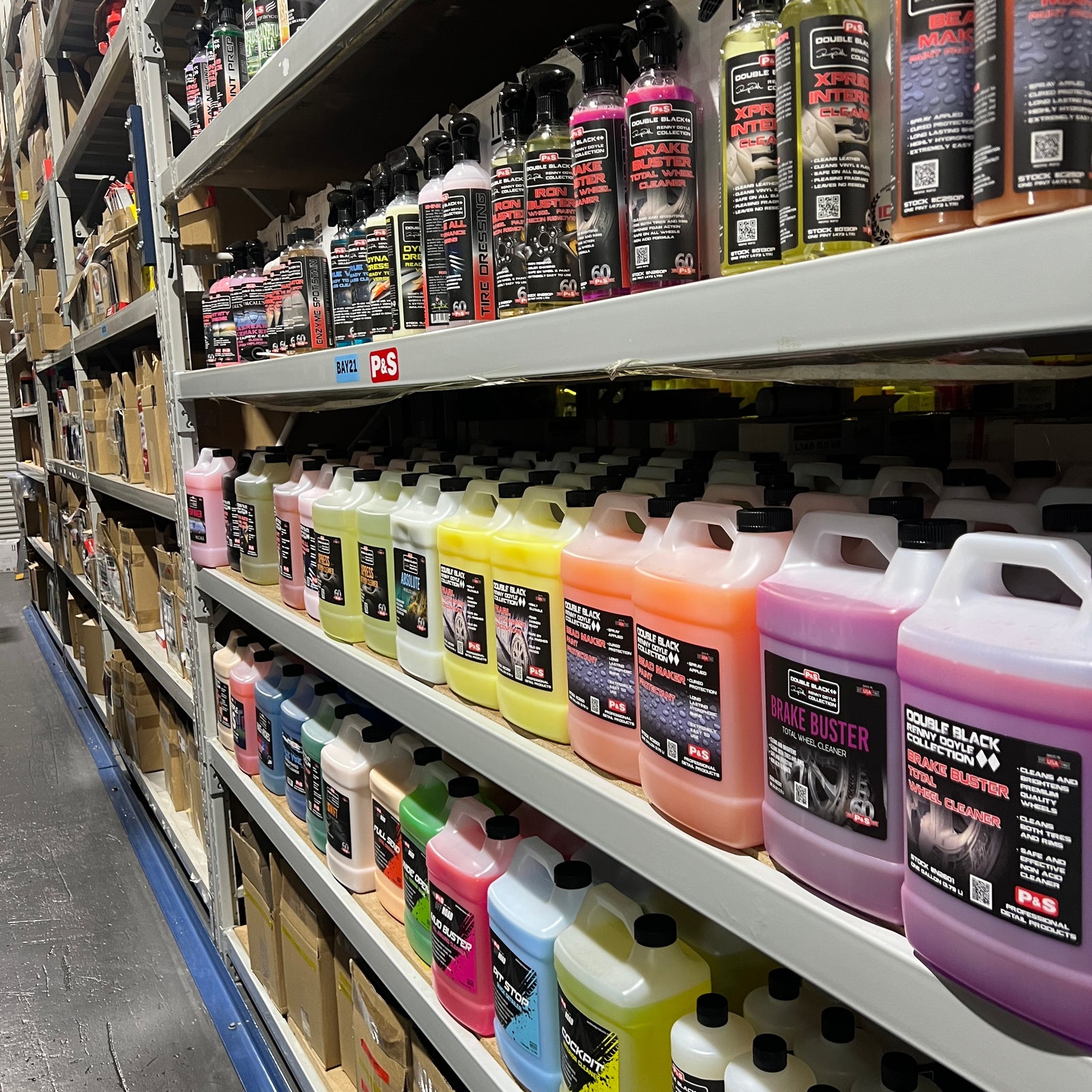
Everything else helps solve specific problems, save time or achieve a higher level of finish. Most of what's on this checklist comes from ARMOUR Detail Supply (see their quick reference guide), Optimum (see their product guide), Detail Guardz, Maxshine or P&S, see our Complete Guide to P&S if you want to understand that range before you buy.
Choose Your Setup
| Setup | Who It Suits | What You Need |
|---|---|---|
| Daily Driver | Most vehicle owners | Washing, Wheels & Tyres, Interior and Protection |
| Enthusiast | People who enjoy detailing regularly | Daily Driver plus Snow Foam, Decontamination and Better Towels |
| Perfectionist | People chasing the best finish possible | Everything above plus Paint Correction and Ceramic Coatings |
1. Washing
Start here. Bad washing causes more paint damage than anything else.
| Item | What to look at | Starter | Bulk | |
|---|---|---|---|---|
| Shampoo | ARMOUR Shampoo+ or P&S Pearl. Both pH neutral and coating safe. | Standard bottle | Larger concentrate | |
| Snow foam | Bilt Hamber Touch-Less, P&S Frostbite or Labocosmetica PRIMUS 2.0 pH11. Pre wash lifts grit before you touch it. | 1L | 5L | |
| Buckets ×2 | Wash and rinse buckets. Different colours so you never mix them up. | 13L | 20L | |
| Grit guards ×2 | Detail Guardz Dirt Lock. Traps grit at the bottom instead of it going back on your mitt. | Pair | Pair | |
| Wash mitt | Ultra Plush wash mitt. One for paint, a separate one for lower panels. | ×1 | ×2 | |
| Drying towel | Twisted loop drying towel. Big enough to do a panel without wringing it out. | Medium | Large or ×2 | |
| Foam cannon | Foam cannons. Only if you have a pressure washer. A pump sprayer works otherwise. | Pump sprayer | Foam cannon |
2. Wheels and Tyres
Separate tools, always. Brake dust never comes out of a mitt.
| Item | What to look at | Starter | Bulk | |
|---|---|---|---|---|
| Wheel cleaner | ARMOUR Wheel Cleaner or P&S Brake Buster. Safe on coated wheels. | Standard bottle | Larger concentrate | |
| Tyre cleaner | ARMOUR Tire Cleaner. Strips old dressing, grime and tyre blooming before you dress them. | Standard bottle | Larger concentrate | |
| Wheel brush | Long handle wheel brush. Long handle for the barrels, the bit everyone forgets. | ×1 | ×1 plus short handle | |
| Tyre brush | Tyre cleaning brush. Stiffer bristles. Keep it off the wheel face. | ×1 | ×1 | |
| Wheel mitt | Wheel and rim mitt. For faces and between spokes. Never let it near paint. | ×1 | ×2 | |
| Tyre dressing | ARMOUR Tire+, P&S Shine All or Optimum Opti-Bond Tire Gel. Build it up for more shine. | Standard bottle | Larger size | |
| Tyre applicator | Curved tyre applicators. Curved to follow the sidewall. Keeps it off your hands. | ×1 | ×2 |
3. Decontamination
A few times a year, not every wash. This is what makes paint feel like glass.
| Item | What to look at | Starter | Bulk | |
|---|---|---|---|---|
| Iron remover | ARMOUR IRON, P&S Iron Buster or Gtechniq W6. Colour changes as it works. | Standard bottle | Larger size | |
| Clay | Clay bar or clay towel. Clay towel is faster over a whole car, clay bar is better on neglected paint. | Clay bar | Clay towel or block | |
| Clay lubricant | Never clay dry. 3D GLW Series Clay Lubricant, a rinseless wash or dedicated lube all work. | Standard bottle | Larger size | |
| Panel prep | P&S Paint Coating Surface Prep. Only if you are coating. Removes oils so the coating bonds to paint. | Standard bottle | Larger size |
4. Paint Correction
Optional. Only if you want to remove swirls rather than just protect what is there.
| Item | What to look at | Starter | Bulk | |
|---|---|---|---|---|
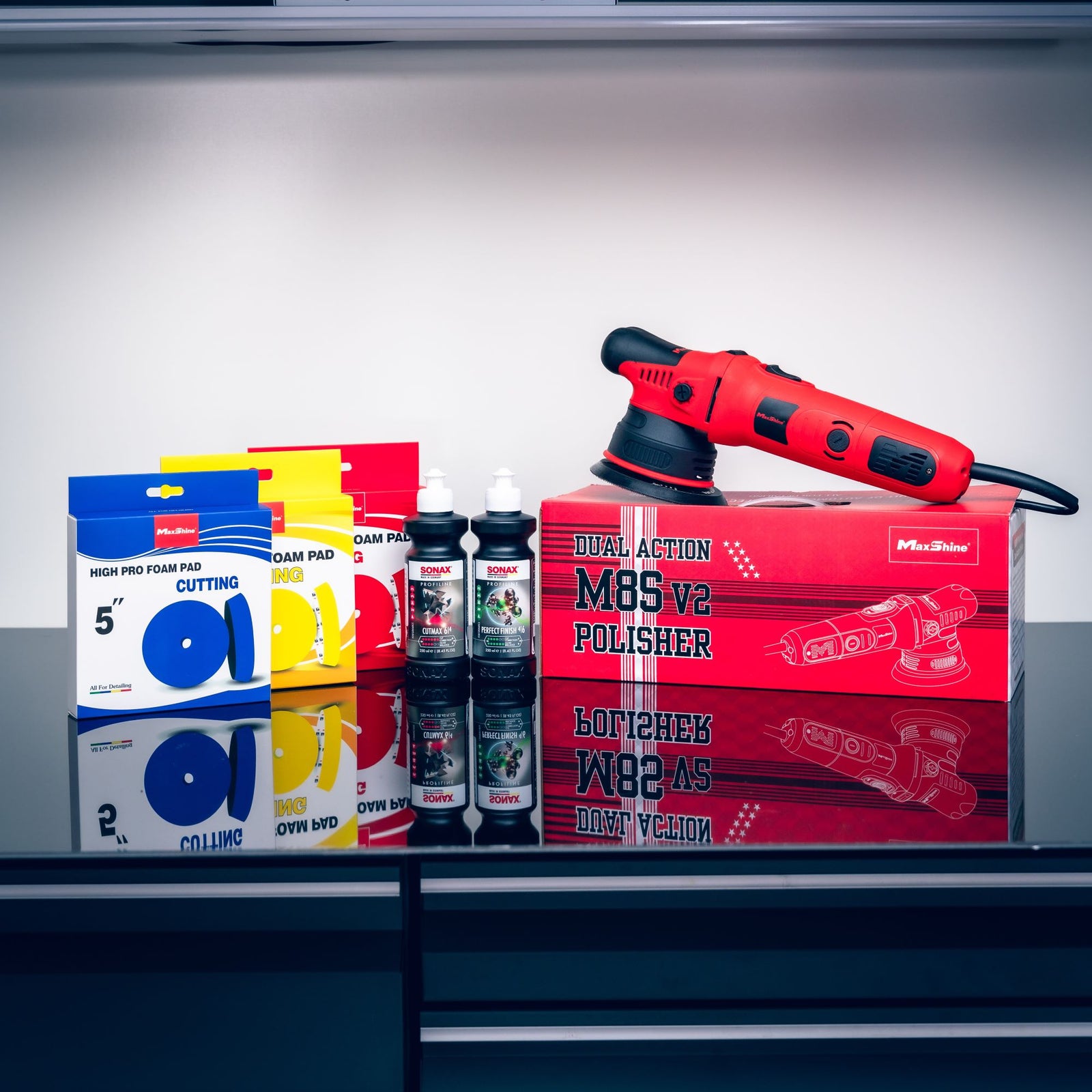
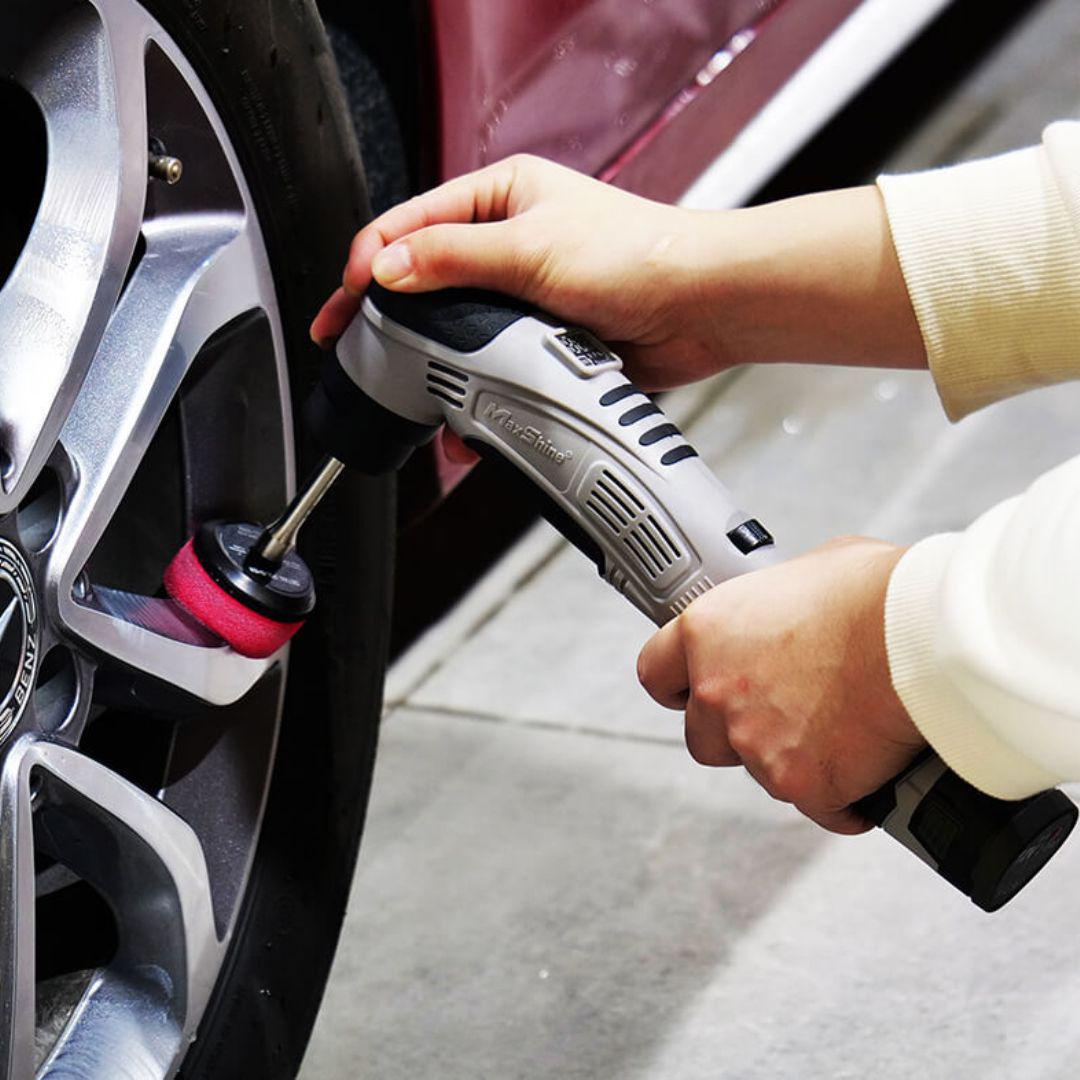
| Polisher | Maxshine M8S V2 to learn on, M15 PRO v2 if you want one machine for everything. | M8S V2 | M15 PRO v2 | |
| Pads | Buffing pads or the Buff and Shine Uro-Tec Sculpted Edge Pad Kit. Cutting, polishing and finishing. Buy more than you think, they load up fast. | 3 pads | 6 to 9 pads | |
| Compound and polish | Compounds and polishes. A cutting compound and a finishing polish covers most jobs. | Standard bottles | Larger sizes | |
| Masking tape | Automotive masking tape. Automotive grade so it comes off clean. Trim, rubber, badges. | 18mm | 18mm and 36mm | |
| Inspection light | Paint inspection light. You cannot correct what you cannot see. Shed lighting hides swirls. | ×1 | ×1 |
5. Protection
Pick one level. You do not need all of them.
| Level | What to look at | Starter | Bulk | |
|---|---|---|---|---|
| Every wash | Drying aid and gloss topper. ARMOUR AMPLIFY or P&S Bead Maker. | Standard bottle | Larger size | |
| Months | P&S Defender or a ceramic spray sealant. | Standard bottle | Larger size | |
| 1 to 2 years | ARMOUR PHOBIC. Coating protection, spray application. | Single kit | Single kit | |
| 3 to 5 years | ARMOUR Quartz or PRO Quartz. Prep properly, this locks in what is underneath. | Quartz | PRO Quartz | |
| Wheels | Wheel coating. Turns wheel cleaning from a scrub into a rinse. | Single kit | Single kit | |
| Glass | Glass coating. Rain sheets off above about 60km/h. | Single kit | Single kit | |
| Coating applicators | ARMOUR Microfiber Coating Application Pad. Suede cloths and a block applicator if you are coating. | Small pack | Larger pack |
6. Ceramic Coating Maintenance
For cars already protected with a ceramic coating. Wrong products or technique are what shorten a coating's life, not the coating itself.
| Item | What to look at | Starter | Bulk | |
|---|---|---|---|---|
| Coating-safe shampoo | ARMOUR Shampoo+ or P&S Pearl. pH neutral so it will not strip the coating. | Standard bottle | Larger concentrate | |
| Drying aid | ARMOUR AMPLIFY or P&S Bead Maker. Refreshes beading and slickness between washes. | Standard bottle | Larger size | |
| Iron remover | ARMOUR IRON, P&S Iron Buster or Gtechniq W6. Safe over coated paint, lifts what the coating cannot shed on its own. | Standard bottle | Larger size | |
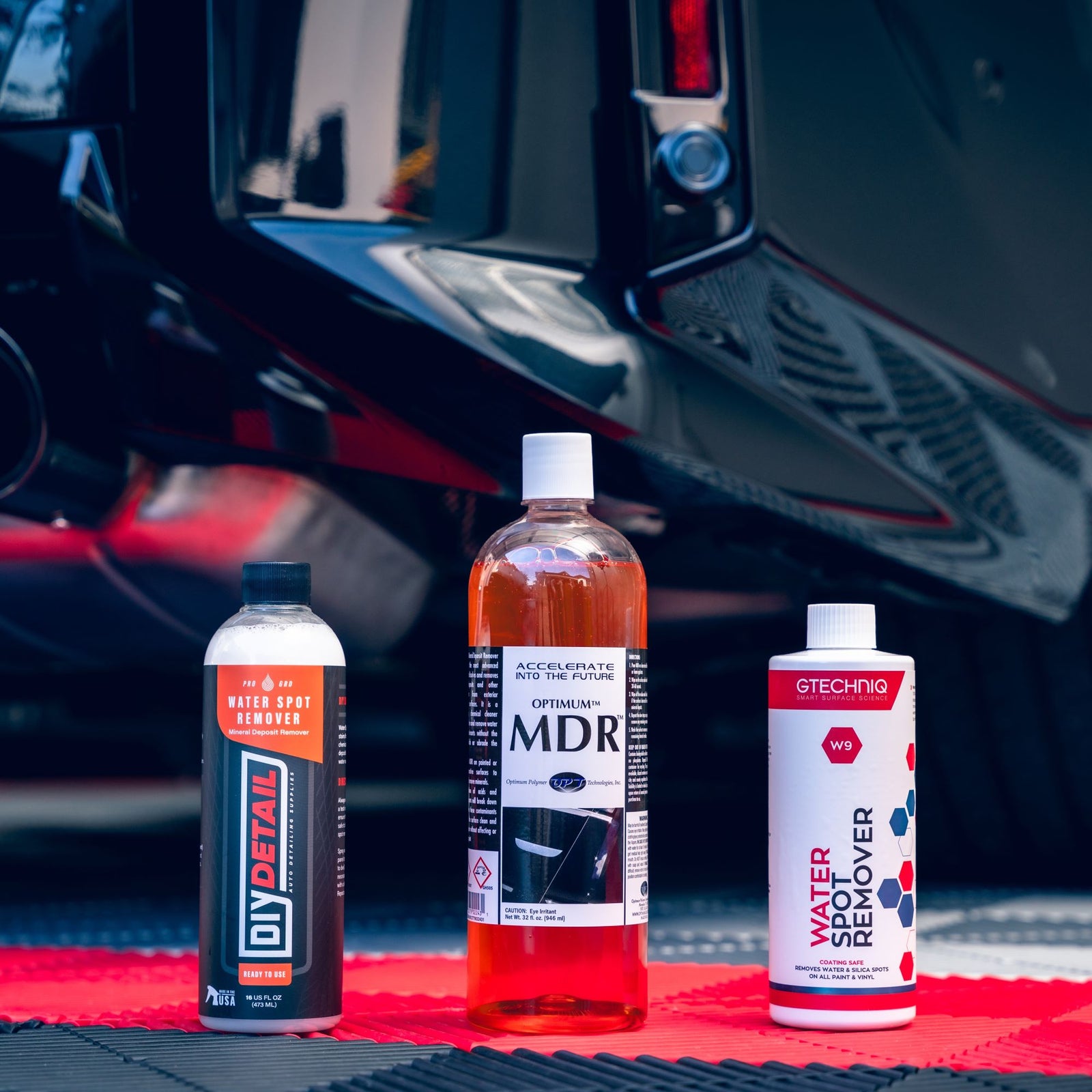
| Water spot remover | A dedicated water spot remover, used sparingly and only when spotting is visible. | Standard bottle | Larger size | |
| Maintenance topper | A spray coating or sealant layered over the base coating to top up hydrophobics. | Single kit | Single kit | |
| Dedicated drying towels | Drying towels kept only for coated paint, never used on wheels or trim. | ×1 | ×2 |
Coated Car Maintenance Schedule
| Task | Frequency |
|---|---|
| Safe wash | Every 1 to 2 weeks |
| Drying aid | Every wash |
| Wheel deep clean | Monthly |
| Iron removal | Every 3 to 6 months |
| Full decon wash | Every 6 to 12 months |
| Coating health check | Annually |
If beading has slowed down or water is sheeting instead of pooling, contamination is usually the cause rather than the coating wearing out. Our paint decontamination guide and ceramic coating guide cover how to bring a tired coating back to life before you consider stripping and reapplying.
7. Interior
One good all surface cleaner and a few brushes covers most cars.
| Item | What to look at | Starter | Bulk | |
|---|---|---|---|---|
| Interior cleaner | P&S Xpress or ARMOUR PILOT. Dash, trim, leather, screens from one bottle. | Standard bottle | Larger size | |
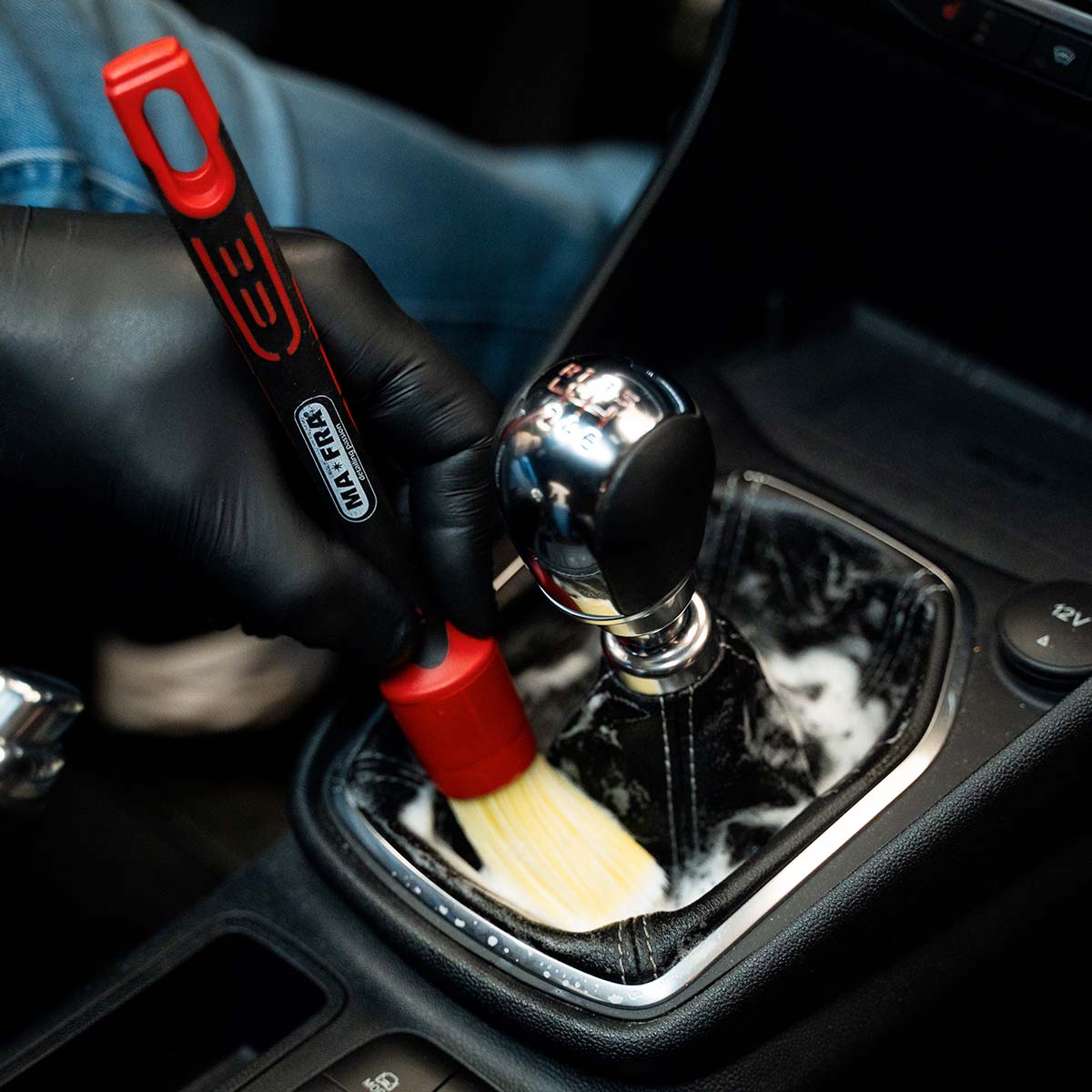
| Detail brushes | Detailing brush 3 pack. Three sizes for vents, seams and switchgear. | 3 pack | 3 pack plus swabs | |
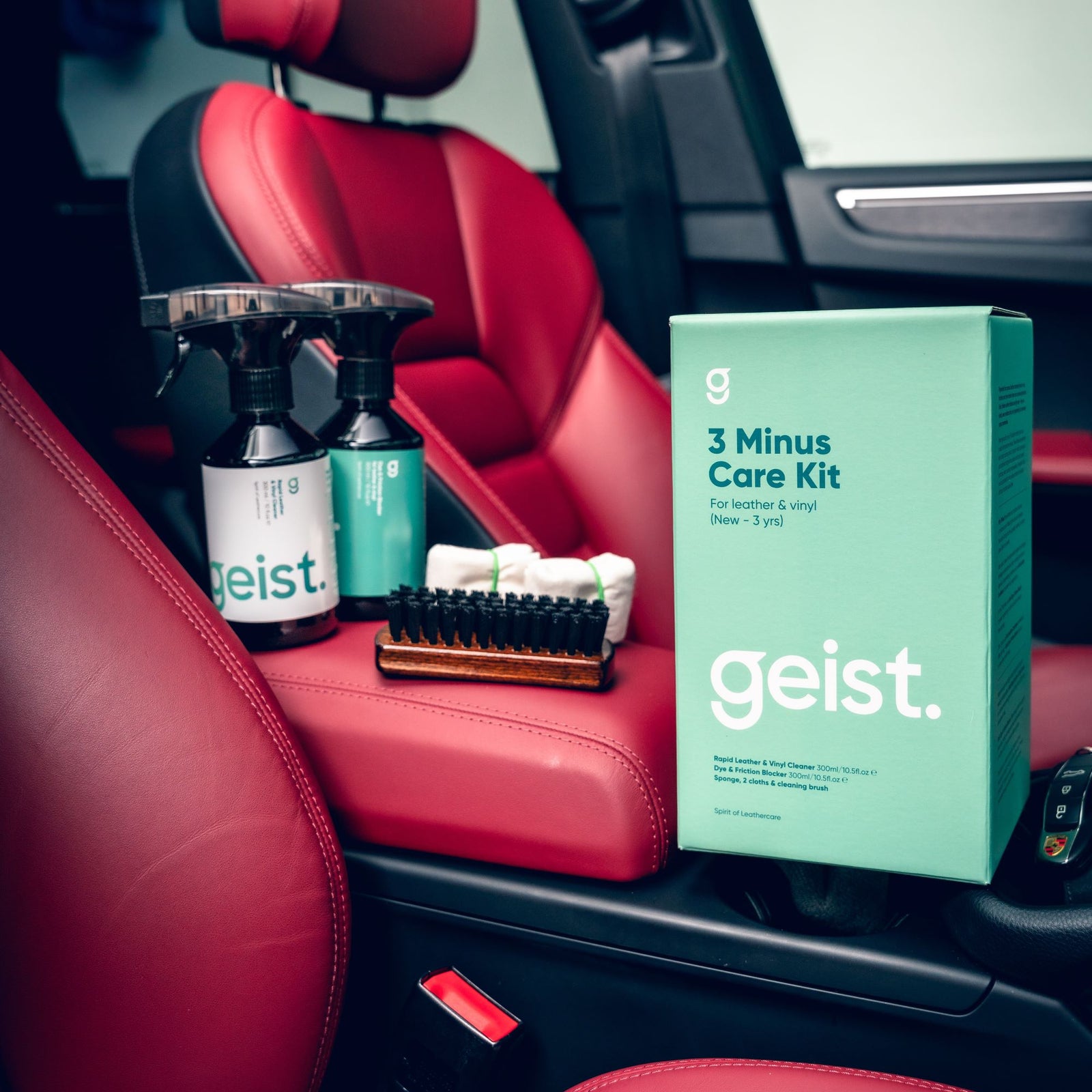
| Leather brush | Leather and alcantara brush. Soft, dedicated. Works cleaner into the grain without damage. | ×1 | ×1 | |
| Carpet brush | Drill carpet brush. Drill attachment version if you want to save real time. | Hand brush | Drill brush | |
| Glass cleaner | P&S True Vue. Safe on tint, no streaking. | Standard bottle | Larger size | |
| Carpet and fabric | Only if you have stains. P&S three step carpet system for the serious stuff. | Single cleaner | Full 3 step kit |
8. Microfibre
Split by surface and colour code. This is the cheapest upgrade on the list.
| Type | What it is for | Starter | Bulk | |
|---|---|---|---|---|
| Drying | Drying towels. Twisted loop, high absorbency. | ×1 | ×2 | |
| General purpose | Edgeless plush towels. Product removal, trim, everyday work. | 5 pack | 10+ pack | |
| Glass | Glass towels. Low pile so it does not streak or leave lint. | 2 to 3 | 5 pack | |
| Interior | Interior microfibre. Separate from your paint towels. Dash, trim, screens. | 5 pack | 10 pack | |
| Towel detergent | P&S Rags To Riches. Never use fabric softener on microfibre. | Standard bottle | Larger size |
How Often Will You Use These Products?
| Product | Frequency |
|---|---|
| Shampoo | Every wash |
| Wheel cleaner | Every wash |
| Drying aid | Every wash |
| Interior cleaner | Monthly |
| Iron remover | Every 3 to 6 months |
| Clay products | Every 6 to 12 months |
| Polish | When required |
| Ceramic coating | Every few years |
How often you use a product decides which size to buy. Anything on the every-wash list, shampoo, wheel cleaner and drying aid, gets used up fast, so a bulk size almost always pays for itself and means you are not reordering every few weeks. Anything used a handful of times a year, like clay or iron remover, is better bought in a starter size. It lasts a long time either way, and a smaller bottle means you are not storing chemicals that may lose effectiveness before the bottle is empty.
The Correct Order to Detail a Car
- Wheels and tyresClean these first so any overspray or dripped brake dust washes off with the rest of the car rather than landing on clean paint.
- Pre-wash and snow foamSee our foam cannon wash method for lifting loose grit before contact.
- Hand washFollow a proper two bucket wash method, top to bottom, panel by panel.
- DecontaminationIron removal and clay, done periodically, not every wash.
- Paint correction (optional)Only once the surface is fully clean and decontaminated.
- Paint protectionSealant, spray coating or ceramic coating, applied to clean, corrected paint.
- Interior cleaningVacuum, wipe down and dress trim last so you are not touching dirty exterior gear afterward.
- Final inspectionCheck panels in good light for anything missed.
The order matters because each stage depends on the one before it. Washing a dirty car with a mitt drags grit across the paint and puts swirls in before you have even started. Correcting paint that has not been decontaminated means polishing over bonded contamination instead of the paint itself, so the result never looks right. Applying protection to paint that still has oils or residue on it stops a coating or sealant from bonding properly, which is one of the most common reasons a coating fails early.
Working in this order also saves time. Cleaning wheels and tyres first means any splash back gets washed off during the main wash instead of needing a second pass. Doing interior work last means you are not leaning on a freshly protected panel with dirty gloves or dropping a wheel brush on the seat. A consistent order turns detailing into a routine instead of a guessing game each time.
9. Setup and Storage
Small things that make the whole job less annoying.
| Item | What to look at | Starter | Bulk | |
|---|---|---|---|---|
| Spray bottles | Chemical resistant bottles. Chemical resistant with good triggers. Label them. | ×2 | ×4 to 6 | |
| Measuring cup | Measuring cups. If you buy concentrates, measure properly or you waste the savings. | ×1 | ×1 | |
| Bucket labels | Wash, rinse, wheels. Stops the expensive mistake. | Set | Set | |
| Brush holder | Brush holder. Wall mounted. Brushes dry properly instead of sitting damp. | ×1 | ×1 |
Most Common Beginner Mistakes
| Mistake | Fix |
|---|---|
| Using one bucket | Use a wash and rinse bucket, always |
| Using wheel towels on paint | Keep wheel and paint mitts completely separate |
| Buying a machine polisher first | Improve your washing technique before you buy a polisher |
| Buying bulk products immediately | Test a starter size before committing to a bulk bottle |
| Using household towels | Use dedicated microfibre, household towels scratch paint |
| Skipping wheel cleaning | Brake dust spreads contamination to paint and tyres |
How We Built This Checklist
This checklist is based on the products, questions and recommendations our team provides daily to Detailing Shed customers across Australia. Rather than listing every product available, we focused on the items most owners actually need to maintain, protect and improve a single vehicle.
What Products Do I Need To Detail My Car?
At minimum, a shampoo, wheel cleaner, wash mitt, drying towel, interior cleaner and a basic paint protection product. Everything else on this checklist adds a specific benefit, like removing swirls, decontaminating the paint or extending protection to years rather than weeks.
What Should A Beginner Buy First?
Start with the Washing section: shampoo, two buckets, grit guards, a wash mitt and a drying towel. This single change, moving from one bucket to two, prevents more paint damage than any product you can buy.
What Is The Correct Order To Detail A Car?
Wheels and tyres, pre-wash, hand wash, decontamination, paint correction if needed, paint protection, then interior. See the full breakdown and reasoning in The Correct Order to Detail a Car above.
How Much Detailing Equipment Do I Need?
For a daily driver, very little: two buckets, a mitt, a drying towel and a handful of chemicals. Equipment needs grow with your goals, an enthusiast adds snow foam and decontamination gear, a perfectionist adds a polisher, pads (see our Complete Guide to Buff and Shine) and coating applicators.
Do I Need A Pressure Washer?
No. A pressure washer speeds up rinsing and lets you run a foam cannon, but a pump sprayer and a garden hose will get a single car clean. It is a convenience upgrade, not a requirement.
Frequently Asked Questions
What products do I need to detail my own car?
Shampoo, a wheel cleaner, a wash mitt, a drying towel, an interior cleaner and a paint protection product cover the essentials. See the full wash guide for the technique to go with it.
What should beginners buy first?
The Washing section: shampoo, two buckets, grit guards, a wash mitt and a drying towel. Fix your wash routine before spending on anything else, and see how to dry your car without scratching it, drying causes more marring than washing does.
Do I need a pressure washer?
No. It helps with rinsing and foam cannon use, but a pump sprayer and hose are enough to properly wash one car.
Do I need a foam cannon?
Only if you already have a pressure washer. Read our foam cannon wash method to see whether it suits your setup.
How many microfibre towels do I need?
As a minimum, separate towels for drying, general paint work, glass and interior. See how to wash microfibre towels the right way to keep them performing.
Do I need a machine polisher?
Only if you want to remove swirls and scratches rather than just protect the paint that is already there. Sort your washing technique first.
How often should I use iron remover?
Every 3 to 6 months for most daily drivers, or more often if the car is parked near train lines, industrial areas or busy roads. See our iron remover guide for how to tell if it is working and when to reapply.
How often should I clay a car?
Every 6 to 12 months for most cars. See our paint decontamination guide for how to tell if it is due sooner.
Do I need a ceramic coating?
No, it is optional. A drying aid or spray sealant protects paint for weeks to months. A ceramic coating is for owners who want years of protection and easier maintenance in exchange for a bigger upfront job, see our ceramic coating guide for what that job involves.
What is the difference between a wax, sealant and ceramic coating?
Wax typically lasts weeks, a synthetic sealant lasts months, and a ceramic coating lasts one to five years depending on the product. Durability and cost generally rise together.
How much does it cost to start detailing your own car?
A basic washing kit, shampoo, mitt, two buckets and a drying towel, is the smallest starting cost. You can build out wheels, decontamination and protection gradually from there rather than buying everything at once.
What products can beginners skip?
Paint correction gear, coating applicators and specialty carpet systems can all wait. They solve problems most beginners do not have yet. For interior odour and sanitising once you are comfortable with the basics, see our Complete Guide to Bio-Bombs.
What should I buy in bulk?
Anything used every wash: shampoo, snow foam and wheel cleaner. These get used up fastest and a larger size is almost always cheaper per wash.
How often should I wash my car?
Every 1 to 2 weeks for most daily drivers, more often if the car is garaged and driven less, or exposed to salt air, tree sap or heavy road grime.
How often should I maintain a ceramic coating?
A safe wash every 1 to 2 weeks, a drying aid every wash, and an iron removal or full decontamination wash every 3 to 12 months. Read why your ceramic coating stopped beading if it is not performing like it used to.
Download and Print This Checklist
This checklist is built to print. Tick off what you already have on screen, or print it blank and take it with you into the garage, workshop or shed while you build out your kit.
Not sure what to tick?
Tell us what you drive, where you park it and how often you wash, and we will mark up this list for you. We will happily tell you what to skip.
Get In Touch